There was talk earlier this year among professional golf pundits about whether the Players Championship should replace the PGA Championship as one of the four “major” tournaments that make up the sport’s Grand Slam. The Players is run by the PGA Tour and its members, while the PGA Championship is hosted by the PGA of America, an organization whose members are the club professionals at golf courses around the country. The PGA Championship is generally considered the weakest of the four Grand Slam tournaments, which also include the U.S. Open, the Masters, and the Open Championship (which most of us call the British Open).
Just like horse racing’s Triple Crown, the Grand Slam is a made-up series. There’s nothing that really connects them other than tradition. Golf aficionados like to measure greatness by who has won the most of the four majors (Jack Nicklaus has 18 major victories, with Tiger Woods second on the list with 15). Likewise, in horse racing, we often judge horses, trainers, and jockeys by their success in Triple Crown races. Thoroughbred racing claims to have 13 Triple Crown winners, though the racing term had yet to be invented when Sir Barton won the Kentucky Derby, Preakness, and Belmont Stakes in 1919. Triple Crown wasn’t used until 1930 when Gallant Fox swept the three races, but it quickly caught on.
Many golf traditionalists don’t want to change their Grand Slam, though some may say, “Well, let’s call the Players Championship the ‘fifth major.’” But there are those who are ready to boot the PGA Championship from the Grand Slam and replace it with the Players.
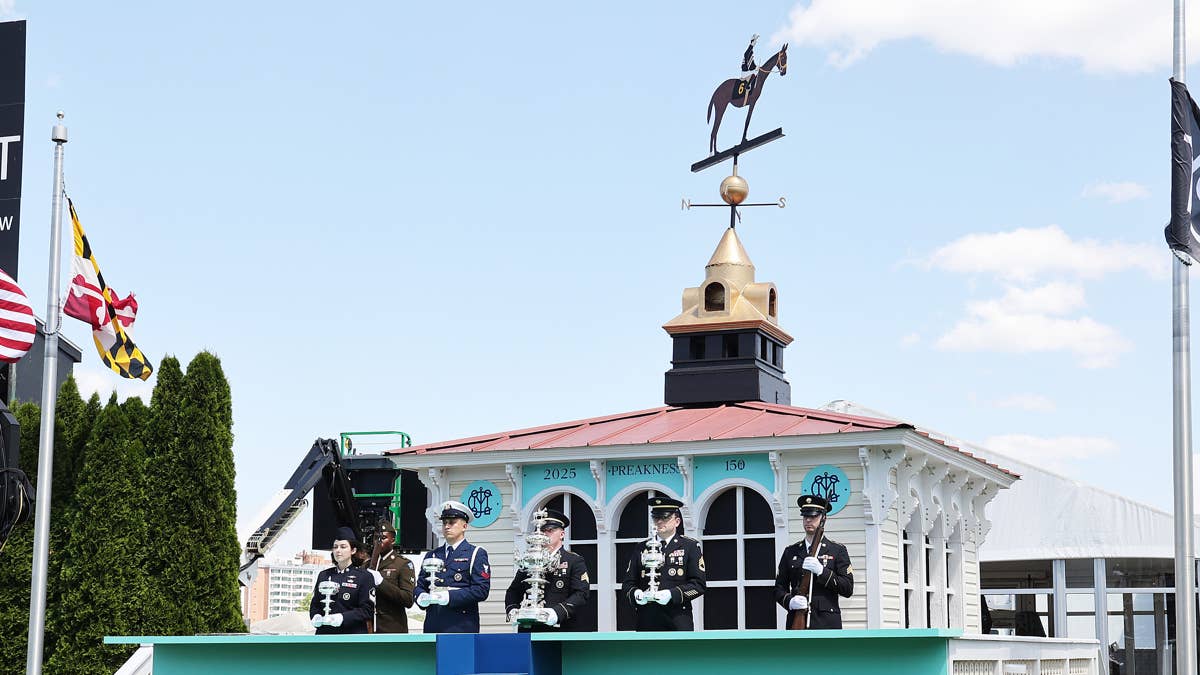
There’s no one in racing – yet – who is ready to suggest we kick the Preakness out of the Triple Crown, even though it is increasingly becoming the weakest link in the series. But at some point, especially if there is a continuation of the trend of Kentucky Derby winners not running back two weeks later in the Preakness, that difficult conversation might become necessary.
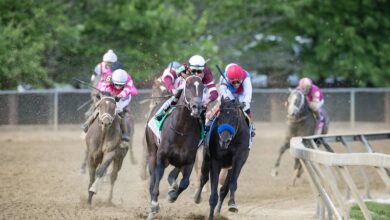
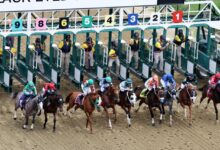
While this year’s Preakness may be a good betting race, with a 14-horse field and a 9-2 morning line favorite, this has to be one of the weakest Triple Crown races in modern history. There is one Grade 1 winner in the field – last year’s Champagne Stakes winner Napoleon Solo – and two Grade 3 winners in Gotham winner Iron Honor (the aforementioned 9-2 favorite) and last year’s Street Sense winner Incredibolt, co-second choice at 5-1.
If the industry can’t get together and adopt a new Triple Crown schedule that fits the reality of today’s Thoroughbreds and the people who train them, we’re going to have to get used to fields like this. And if that’s the case, we may have to start looking at the Travers Stakes at Saratoga as the third and final leg of the Triple Crown.
That’s not what The Maryland Jockey Club and the state of Maryland want to hear, especially since hundreds of millions of dollars are being invested by the state to rebuild Pimlico after essentially buying out Belinda Stronach’s 1/ST Racing and now owning horse racing in the state of Maryland.
Well, not quite.
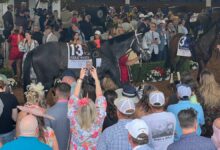
Neither The Maryland Jockey Club nor the state of Maryland “own” the Preakness. As part of the deal to say goodbye to Stronach, the agreement calls for 1/ST to hold the intellectual property rights to the Preakness and the Black-Eyed Susan, the accompanying race for 3-year-old fillies. The Maryland Jockey Club has said it would still have control of operations, scheduling, and television contracts for those races. Stronach was to receive an annual fee and a percentage of wagering, totaling about $6 million a year, a figure that would gradually increase.
Then, in a move last month that caught everyone by surprise (including state officials and The Maryland Jockey Club), 1/ST sold those rights to Churchill Downs, Inc. (CDI) for $85 million. CDI has done a phenomenal job in growing the Kentucky Derby and its flagship racetrack in Louisville, but the company didn’t indicate exactly what it would do with ownership of the Preakness brand and its intellectual property.
We might never find out. According to reporting this week by the Baltimore Sun, the state of Maryland, under a 2024 law, has the right to match the offer from Churchill Downs and buy those intellectual property rights for the same $85 million.
CDI has never struck me as a company that goes out of its way to help its fellow racetracks. Was their agreement to buy the Preakness intellectual property rights done with the intention of growing the event? Or would they just be trying to create a bigger footprint in Maryland, where they already have a harness track and casino on the Eastern Shore, but may have designs on additional gaming?
I also wonder whether the legislature will even allow the purchase to proceed if the state decides to go that path. They already made headlines last week for pressing "pause" on the $48.5 million purchase of Laurel Park, and several lawmakers spoke out against spending additional funds propping up what they said was an industry lacking "long-term stability."
In my view, the state’s investment in Maryland racing won’t be complete until all aspects of its biggest annual event are under the same roof at Pimlico – and not in Louisville. It's important for the sake of the Preakness and the Triple Crown that the state and The Maryland Jockey Club control their own destiny. Buying back the intellectual property rights to the Preakness would be the best $85 million they ever spent.
That’s my view from the eighth pole.
This story was originally published by Paulick Report on May 14, 2026, where it first appeared in the News section. Add Paulick Report as a Preferred Source by clicking here.