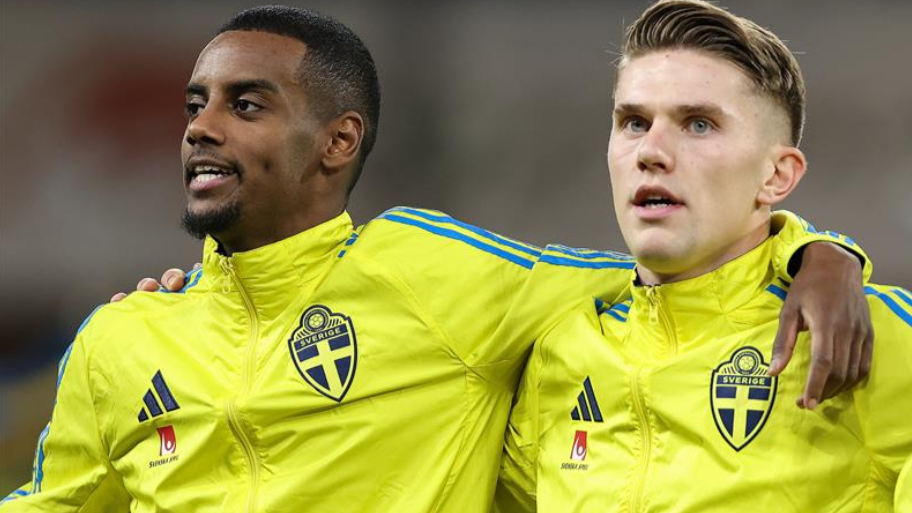
Arsenal striker Viktor Gyokeres and Liverpool forward Alexander Isak have been named in Sweden's World Cup squad.
However, the summer's tournament in Canada, Mexico and the United States has come too soon for Tottenham forward Dejan Kulusevski, who misses out having not played this season because of a knee injury.
Sweden coach Graham Potter said it was difficult to leave out the 26-year-old.
"A very, very difficult decision in terms of where he [Kulusevski] has been and what he's done over the last year, where he's at in terms of his rehab with four and a half weeks to go to that first game," Potter told a news conference.
Isak, 26, has also had an injury-hit campaign and has only started eight league matches for Liverpool since his £125m British record transfer from Newcastle last summer.
"We obviously hope he finishes the season in Liverpool with some game time," added Potter. "Our challenge is to get Alex in the best moment of the season and for him to hit top form, because if he does, he's a world-class player."
Sweden endured a miserable qualifying campaign, finishing bottom of their group with two points, but their performance in the Nations League gave them a second chance and wins over Ukraine and Poland in the play-offs took them to the finals.
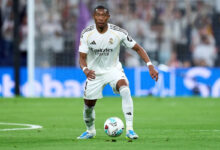

"It's incredibly exciting – a huge honour for me," said Potter, who became Sweden manager in October. "The positive response from our supporters has been fantastic, and now we're looking forward to creating more memories together during the World Cup."
Gyokeres and Isak are two of 11 British-based players in the squad, which also includes goalkeepers Viktor Johansson (Stoke) and Jacob Widell Zetterstrom (Derby) and defenders Hjalmar Ekdal (Burnley), Gabriel Gudmundsson (Leeds) and Victor Lindelof (Aston Villa).
Midfielders Yasin Ayari and Lucas Bergvall, who play for Brighton and Tottenham respectively have also been named, as have Newcastle winger Anthony Elanga and Celtic forward Benjamin Nygren.
Sweden are in Group F and play Tunisia in Monterrey, Mexico on 14 June (03:00 BST, 15 June) before two games in the United States – against the Netherlands in Houston on 20 June and Japan in Dallas five days later (00:00 BST, 26 June).
-
The World Cup line-up is complete – here's what you need to know
-
World Cup 2026: A guide to the 16 stadiums in the USA, Canada & Mexico
-
50 days until World Cup – pick your favourite kits
-
BBC to show Scotland's first World Cup game since 1998
Sweden World Cup squad
Goalkeepers: Viktor Johansson (Stoke City), Kristoffer Nordfeldt (AIK), Jacob Widell Zetterstrom (Derby County).
Defenders: Hjalmar Ekdal (Burnley), Gabriel Gudmundsson (Leeds United), Isak Hien (Atalanta), Emil Holm (Juventus), Gustaf Lagerbielke (Braga), Victor Lindelof (Aston Villa), Erik Smith (St. Pauli), Carl Starfelt (Celta Vigo), Elliot Stroud (Mjallby), Daniel Svensson (Borussia Dortmund).
Midfielders: Taha Ali (Malmo), Yasin Ayari (Brighton), Lucas Bergvall (Tottenham), Jesper Karlstrom (Udinese), Ken Sema (Pafos), Mattias Svanberg (Wolfsburg), Besfort Zeneli (Union St-Gilloise).
Forwards: Alexander Bernhardsson (Holstein Kiel), Anthony Elanga (Newcastle United), Viktor Gyokeres (Arsenal), Alexander Isak (Liverpool), Gustaf Nilsson (Club Brugge), Benjamin Nygren (Celtic).
-
Follow your club with BBC Sport
-
Listen to the latest Football Daily podcast
-
Get football news sent straight to your phone