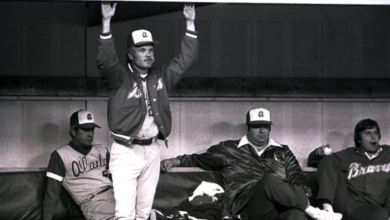
Long after Bobby Cox managed his final game on October 11, 2010, and stepped away from the game he dedicated his life to, the news of his passing on May 9 felt like the coda to a magical period in Atlanta Braves history.
As it did throughout a storied baseball career that began in 1959, Cox’s influence still reverberates through the Braves organization. His loss was felt not only by the hundreds of men who played under the legendary skipper for over three decades, but by generations of baseball fans as well.
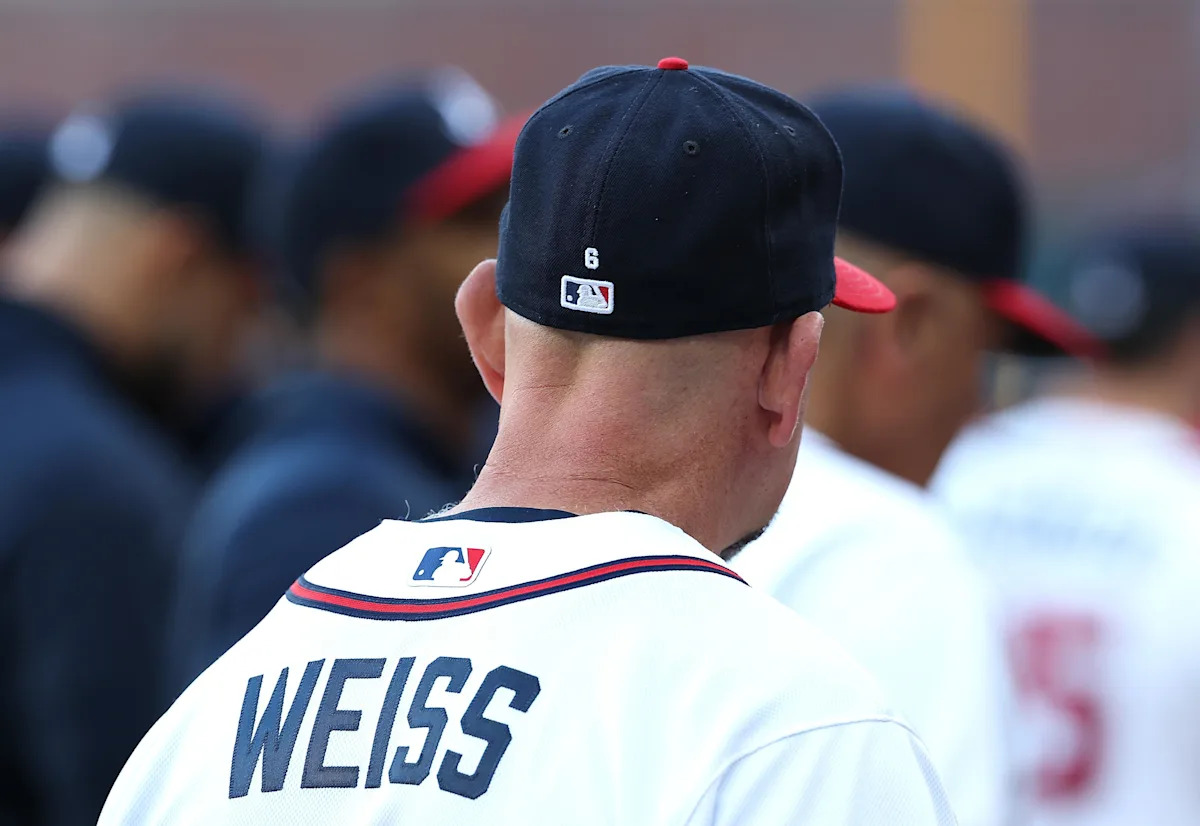
Current Atlanta manager Walt Weiss counts himself as fortunate to have played for Cox and believes that his legacy and commitment to the game will continue to live on.
“I wish everybody in the game could either play for Bobby or work with Bobby for at least one year just to see how it’s supposed to be done,” Weiss said. “He was different. He was a different type of leader, different type of person, really. He just created loyalty with how he treated people and that respect always came back to him.”
The passing of Cox added to an emotional week for the team as it closely followed the death of longtime owner and media mogul Ted Turner on May 6. Those two men were instrumental to the Braves’ rise to prominence in a true golden era that was the 1990s.
Cox led the team both on the field and the front office during two separate stints in Atlanta, while Turner established Braves baseball as a staple of his television empire on TBS.
As the club memorialized both men on Tuesday at Truist Park, the memories, testimonials and deep reverence shared by many who experienced those years was palpable.


Though Turner led from afar for most players and coaches in the organization, Cox’s fingerprints were all over the design of the team. His death struck a resounding chord for those who experienced life with the Braves during Cox’s time as a stalwart of the organization.
“I think everybody’s done a really good job of just communicating the legacy of Bobby Cox,” Weiss said on Tuesday. “A lot of great stories and just a lot of confirmation about what a great leader he was the impact he had on so many people.”
Though baseball is the ultimate game of numbers and those accomplishments may garner significant glory, Cox received universal praise for his loyalty and belief in his teams. The way he interacted with, utilized, and thereby instilled confidence in his players was second to none.
“He was a great encourager, and he had a knack for always making you feel like you were playing better than you actually were,” Weiss said. “Even in times where you struggled, he went out of his way to make you feel like maybe it wasn’t as bad as you thought. That’s probably the biggest thing I take from him, because I’m always in tune with that.”
Weiss, who is in his second stint as a major league manager, carries the lessons learned during a 14-year playing career with him to this day. The final three of those seasons were spent in Atlanta playing for Cox, who Weiss witnessed balance fiery competitiveness with steadfast loyalty.
Having the opportunity to pay those lessons forward is important to Weiss.
“With guys that are struggling, especially, [I] go out of my way to check in with them,” Weiss said. “I enjoy encouraging guys. I know how hard the game is. Over the course of my career, I struggled at times as much as anybody in this game, so I don’t ever want to forget that. That’s why I think it’s important to be an encourager. You have standards and you want to hold guys accountable to those standards, too, but at the same time you’ve got you got to encourage them. That’s the sort of thing Bobby was great at.”
Striking a balance between the tangibles and intangibles that lead to victory is one of the many responsibilities a major league manager signs up for. Playing for Cox allowed Weiss to gain a deeper understanding of just how much winning can be done in moments when not even a single pitch is thrown.
“Look, at the highest level, the margin of victory is razor thin,” Weiss said. “The difference between first and last place is one win a week. That’s 26 games out at the end of the year. So, you look for ways to create the edge, because it is razor thin. Maybe it’s encouraging a guy or speaking confidence into him so that he plays better ultimately. That’s where the culture comes in. Any way that you can create an edge could be a difference-maker in this game because it’s difficult to win at the highest level. Bobby was always so in tune with those things, and he always had great culture.”
Even though Weiss had already played for great teams and a World Series champion with the Oakland Athletics early in his career, it did not take him long to realize Atlanta’s way of doing things was different. By the time Weiss arrived, the World Series was an annual expectation.
“I remember coming in my first year in spring training as a Brave, because they were in the middle of that run I was thinking, ‘Man, I don’t want to be the one to screw this thing up,’” Weiss said. “So, you get on board and you do things the way that Bobby wanted them done.”
In doing so, Weiss was able to be a part of some special teams during his three-year stay in Atlanta. While the Braves did not realize the dream of becoming World Series champions again, Weiss recognized that he was experiencing something truly rare with Cox’s revered leadership style.
“I think that the greatest compliment I can give him is that in 1999, we lost in the World Series to the Yankees and every guy in the room felt like we let Bobby down,” Weiss said. “I mean, that doesn’t happen in professional sports. A lot of times it becomes self-preservation because it’s such a cutthroat business, but he had that kind of impact where you knew when we didn’t play well. In that instance, we didn’t win the World Series for him, and we felt like we let him down. I don’t know if I’ve ever felt that before and at this level.”
The drive to baseball’s postseason begins when the team reports to spring training. In addition to the physical preparation required over the course of a marathon season, the club sets its intent through intense commitment to one another and the organization.
The Braves franchise underwent a tonal shift when the 1991 club went from worst to first in the National League West and set off a string of events that would establish Atlanta as a perennial contender.
After decades of irrelevance in the standings, expectations changed. So too did the Braves’ standards. Atlanta captured 14 consecutive division titles, won five NL pennants, and defeated the Cleveland Indians to win the 1995 World Series during their incredible run under Cox.
In many ways Cox was an instrument of change, right down to how the team dressed.
“I stand up in front of the club and talk about our standards or rules – I like to call them standards not rules – but and we continue the tradition of taking care of the brand,” Weiss said. “I communicated that on the first day of spring training, how important that is to me and how important it’s been to a lot of people before me. We’re going to continue to respect that and honor it in the way that we wear the uniform, the way that we respect the brand. The brand means something really special to a lot of people. A lot of people have worked hard to make it this brand special and Bobby is at the forefront of that. So, as long as I’m here, we will always honor that.”
That is certainly a fitting tribute to Cox and his legacy.
While the game continues to evolve, the uniform standard remains sacrosanct to the Braves. It was of the utmost importance to Cox. Though his playing days were long behind him, Cox still wore his traditional stirrup socks and metal spikes every single day he put on a Braves uniform. It was a small but meaningful symbol of his reverence for the game.
Even in something as relaxed as the batting practice environment, Weiss believes just as Cox did all those years that the Braves brand is always on display.
“We don’t go out there in t-shirts and cutoffs and that kind of thing,” Weiss said. “We wear the uniform. We’re going to respect the Braves brand. We’re going to wear a hat the right way. Bobby’s thing was that we don’t put the sunglasses over the ‘A’ so that people can see the ‘A.’ We’ll continue to do that. It’s just a respect for the game a respect for the brand.”
With Cox already immortalized in the National Baseball Hall of Fame, his lasting legacy will be one of a man who held a deep respect for the game, fostered relationships, elevated the people around him, maximized talents, and left baseball better than he found it.
“I said this when I got hired, that I was proud that in some small way as it relates to me that Bobby’s lineage continues,” Weiss said. “He’s been foundational to the Braves’ success over the last few decades, so I’m proud of that… I’m proud that in some small way I’m an extension of Bobby.”