Only a month remains until the World Cup descends upon the U.S., Mexico, and Canada, and thousands of tickets remain unsold, listed at extremely high prices.
Prices are starting to fall—barely—but FIFA will need a more dramatic drop in costs if it wants to fill stadiums, experts tell Front Office Sports.
FIFA opened its alleged final “last minute” sales window on April 1, saying it would stay open through the tournament. This would be the first time that any member of the public could access tickets straight from FIFA without needing to be selected at random, or go through a federation or special offer.
But FIFA didn’t put up all remaining tickets on April 1. The global governing body made some tickets available that day, but said at the time that “tickets will continue to be released on a rolling basis,” and it has continued slowly releasing more inventory as the tournament gets closer.
Sometimes, FIFA announces its releases, as the global governing body did for two drops April 22 and May 7. The official announcement came two days before the April 22 drop and one day before the May 7 window. In these cases, fans wait for hours in the virtual queue, and when they finally get access to view tickets, they find prices that are higher than they want to pay, or experience glitches and error messages.
In other instances, the inventory fluctuates without an official announcement. On Monday, some ticket categories had appeared, disappeared, or changed prices from last week’s official drop.
In both cases, FIFA is drip-feeding tickets to a tournament that is already seeing unprecedented demand.


“It’s revenue maximization from FIFA,” Kieran Maguire, author and podcast cohost of The Price of Football, tells FOS. “I think FIFA have abandoned the traditional soccer fan and they’re pursuing a strategy of making as much money as they can, so are therefore creating artificial scarcity in the market by having small drops of tickets.”
Thousands of tickets remain unsold. The issue isn’t a lack of interest—FIFA said in January it received more than 500 million ticket requests—or a lack of inventory. Plenty of fans are interested in buying tickets, and plenty of tickets are still available for them.
FIFA’s problem is that demand does not exist at the prices that are being listed, ticketing expert Jim McCarthy tells FOS. “It would not be hard to sell this tournament, sell every single ticket of this tournament, but the prices are aggressive,” McCarthy says.
When FOS participated in the official ticket drops on April 22 and May 7, the virtual queue took several hours each time. Once inside, the April 22 drop was riddled with error messages, only allowing two match selections amid the warnings before inadvertently returning to the queue. On May 7, the system allowed more selections—FOS observed high prices for host nations and a ticket to the final listed at nearly $33,000—before again reverting to the line.
FIFA did not respond to questions about its strategy or whether it will lower prices in the future, nor did it confirm if it had released more tickets on Monday.
Will FIFA Lower Prices?
On the secondary market, prices for group stage matches are already coming down. But on FIFA’s primary platform, prices largely remain stubbornly high.
FIFA is using dynamic pricing for the World Cup like it did at last summer’s Club World Cup. Those prices eventually plummeted to nearly nothing; FIFA offered $4 tickets to see Lionel Messi in Miami and free tickets in Seattle.
The Record
There are some signs of ticket prices dipping, although not to levels that would make them widely affordable.
For the U.S. opener against Paraguay in L.A. on June 11, the prices for the highest tier tickets, Front Categories 1 and 2, fell from $4,105 and $2,330 last week to $3,420 and $2,135 respectively by Monday. For the U.S. against Australia in Seattle, FIFA added four Category 2 seats for $570. And after listing a Front Category 1 ticket to the final last week for nearly $33,000, FIFA had two tickets in that tier for $10,990 each on Monday.
With one month until the tournament, FIFA still has thousands of tickets available. For the U.S.–Paraguay opener, 10 sections each still showed an inventory of over 100 available tickets on Monday. But FIFA is still keeping prices for those seats high. In one section alone, FIFA had more than 250 Category 1 tickets listed for $2,735 each.
McCarthy compares the phenomenon to the concert industry’s “Blue Dot Fever,” a recent trend of artists canceling tours because of lagging ticket sales, with a name that alludes to blue dots that appear on Ticketmaster’s website to represent unsold seats. He names Jennifer Lopez trying to model her tour off of Taylor Swift as an example.
“She could have a very successful tour, but not in that way,” McCarthy says. “There’s a disconnect between the actual level of demand, both in terms of quantity and price, and what she put out as a product.”
Some of the prices are less costly. The Jordan–Algeria match in Northern California had a get-in price of $140 on Monday, while Germany against Côte d’Ivoire in Toronto had a cheapest ticket of $285.
But many group stage matches still cost several hundred or even thousands of dollars.
On Monday, $380 was a common get-in price for many matches including Czechia–South Africa, Curaçao–Côte d’Ivoire, Algeria–Austria, Turkey–Paraguay, and Qatar–Swizterland. For tournament favorites like Spain, England, and the Netherlands, FIFA had a get-in price of over $1,000 for some group stage matches.
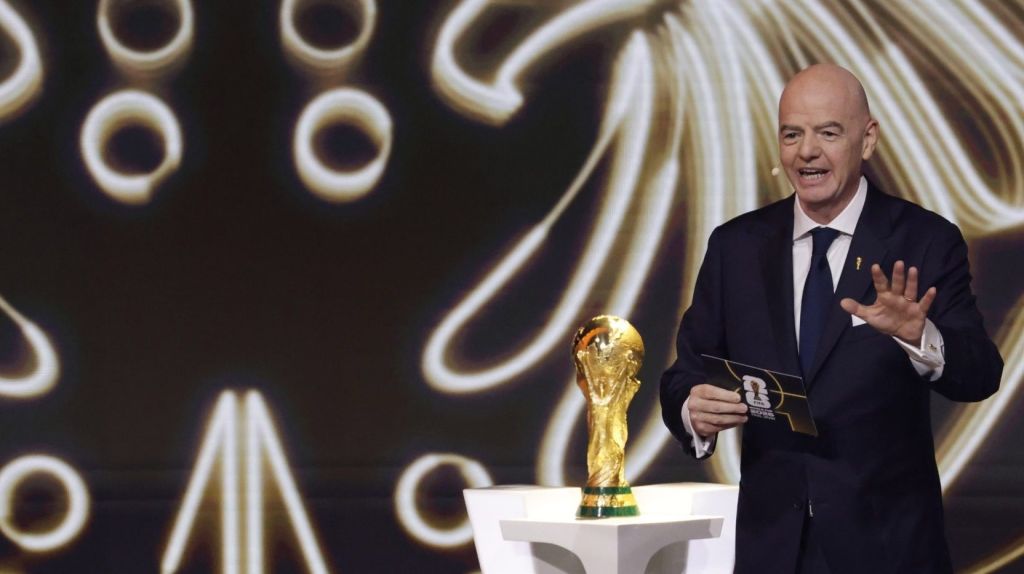
Last week, FIFA president Gianni Infantino defended the high ticket prices, saying “we have to apply market rates” and 25% of group stage matches cost less than $300, which he said was cheaper than a college football game. But Maguire pushes back on that idea.
“For many countries who have qualified for the tournament, they are not wealthy, their GDP is relatively low,” Maguire says. “To therefore be treated as, ‘Well, because it’s a once in a lifetime opportunity, we’re FIFA and we’re going to scalp you, and then blame it upon America,’ I think is incredibly harsh.”
The post Why So Many World Cup Tickets Remain Unsold One Month Out appeared first on Front Office Sports.