During the May 12 meeting of the Kentucky Horse Racing and Gaming Corporation’s (KHRGC) board of directors, chairman Jonathan Rabinowitz announced three new programs aimed at “improving communication and collaboration” with horsemen regarding regulatory veterinarian scratches in Kentucky.
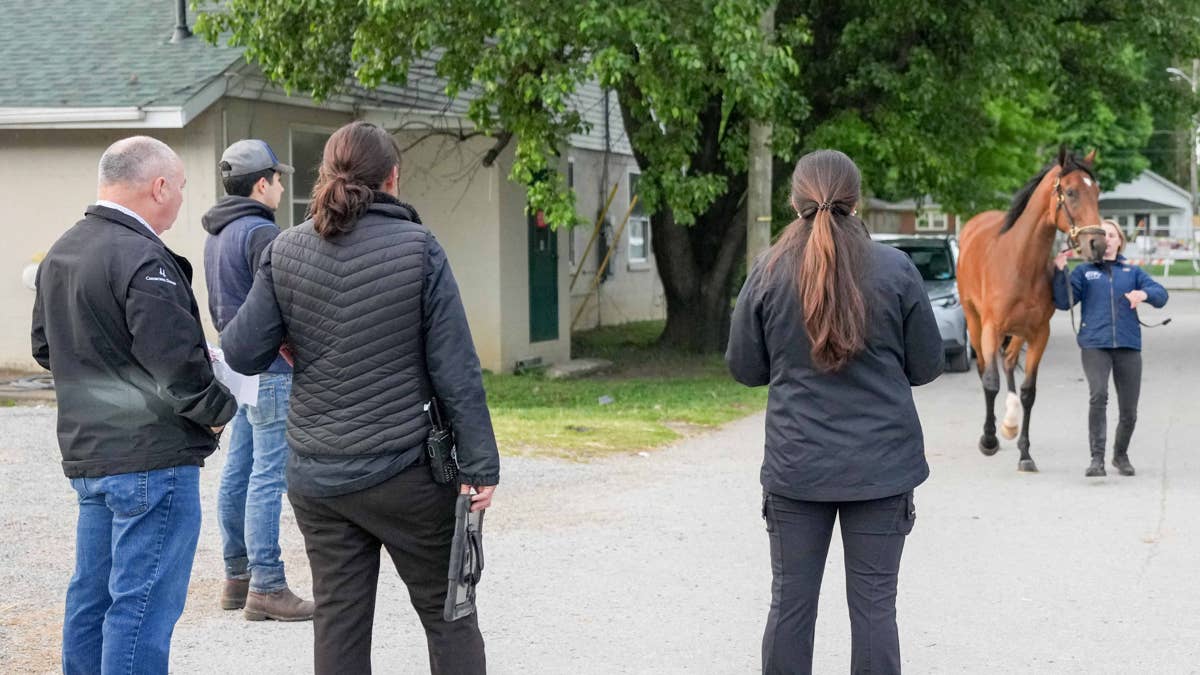
Rabinowitz said he and vice chair Charles O’Connor walked the backstretch at Churchill Downs during Kentucky Derby week, hearing horsemen’s concerns about an increase in regulatory vet scratches. A Paulick Report investigation revealed that the rate of regulatory vet scratches in Kentucky has, in fact, increased over the past several years.
Regulatory vet scratches for unsoundness across all Kentucky tracks (per KHRGC records).
In response to the horsemen’s concerns, the KHRGC has decided to launch three new initiatives related to the regulatory vet scratches.
“These initiatives do not signify a lack of confidence in our veterinary team,” Rabinowitz clarified. “We stand behind our team, who are tirelessly doing an extremely difficult job for the safety and well-being of the racehorses training and competing in Kentucky. However, we’ve heard the concerns and are taking immediate action to address them. This is only the beginning, and we will likely have changes along the way as these initiatives get off the ground.
“At all times, the KHRGC will do what’s in the best interest of the horse and its riders.”
First, the KHRGC will establish a committee to analyze and review state regulatory vet scratches, including process and procedures, data diagnostics, and statistics. Committee members include Terry Finley, representing owners; Dale Romans, chair and trainers’ representative; board vice chairman Charles O’Connor; Bill Landes; and Dr. George Mundy, the commission’s equine medical director. The committee will report to the KHRGC board monthly, beginning in June.
Second, the KHRGC will launch “office hours” for horsemen to discuss concerns with executive director Jamie Eads and equine medical director Dr. George Mundy. These will occur weekly, beginning on Thursday, May 14, at 10:00 a.m., in the chapel at Churchill Downs. Currently, plans call for the office hours to be held through the end of Churchill Downs’ Spring Meet.
Finally, through a partnership with the Kentucky Horsemen’s Benevolent and Protective Association (Kentucky HBPA) and the Kentucky Thoroughbred Association (KTA), the KHRGC will launch a unique pilot program.
“Following a scratch on the advice of the state regulatory veterinarian, a trainer or owner may contact the Kentucky HBPA to request an examination, and, if necessary, diagnostic testing by an independent veterinarian,” Rabinowitz explained. “The result of the examination and the opinion of the independent veterinarian will be provided to the owner and trainer, and the KHRGC and the Kentucky HBPA. Notably, the Kentucky HBPA has agreed to cover a portion of the cost of that examination.”
Rabinowitz said the KHRGC will use that third-party information to “solidify and improve our processes and procedures,” but added that details are still “being ironed out.”
Additional funds for diagnostic testing may be made available by the KHRGC’s Equine Drug Research Council, which meets on May 13 to discuss the proposal from the KTA and the Kentucky Thoroughbred Owners and Breeders.
This story was originally published by Paulick Report on May 12, 2026, where it first appeared in the News section. Add Paulick Report as a Preferred Source by clicking here.