NASCAR is developing a system to expedite race control reviews of crash data to help with calling cautions for cars that leave the scene of an incident.
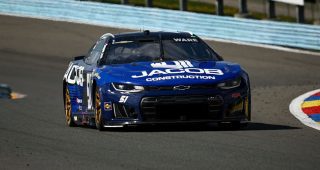
Cody Ware slammed a barrier with his No. 51 Chevrolet with nine laps remaining Sunday at Watkins Glen International. On the latest “Hauler Talk” podcast, NASCAR vice president of racing communications Mike Forde said the incident would have drawn a yellow flag if witnessed in real time, but race director Tim Bermann was notified of the crash by the Turn 6 spotter.
“Tim Bermann clicks over to Turn 6, and as he flips over, he sees the 51 rolling off, and the turn spotter radios the track is clear, so there‘s no debris,” Forde said. “That‘s how it all happened and why there was no caution. And so obviously the follow-up discussion is,‘ Well, that was a big hit. There should have been a caution. How do you fix that?‘ So here’s what the plan is for fixing that.”
RELATED: Cup Series standings | Schedule for Dover
Forde said NASCAR vice president of safety engineering John Patalak already had been working on a project to streamline the delivery of information from the incident data recorder on every car to the scoring tower during a crash. The data, such as G forces and peak acceleration, help measure crash severity.
“What‘s going to happen, and I have no timetable on this, but this data is going to be sent to race control and then be able to be reviewed pretty quickly,” Forde said. “And then we can decide, ‘Hey, that was too big a hit. Even though they rolled off, we need to throw a caution here.‘ … So I think this solution is really interesting and could help a lot in these types of incidents. I think they’re rare. I think the race director is outstanding. Tim Bermann has done a fantastic job. If he had eyes on that wreck as it was happening, that would have been a caution.”
Forde said the process would be helped by a new McLaren Engine Control Unit that will make its debut this weekend at Dover Motor Speedway
“The data and the science is already done and can be calculated pretty quickly, now it’s kind of like just more of a delivery of that data and packaging it and analyzing it,” Forde said.
Forde said that Ware, whose car exited from the race after the crash, was seen and released from the care center.
The track‘s Armco barrier was bent from the impact, and Forde said the damage was noticed post-race.
“We didn’t get any reports that the wall was damaged, but we did look at it after the race, and the damage is more of a pushback,” Forde said. “The Armco isn’t cemented in, and that’s by design. The posts are sledgehammered into the ground. No cement. We want it to give. It almost treats it like a SAFER barrier. So the fact that there was give is how it’s designed to work.
“So what would have happened if it was earlier in the race and we got a report that the wall was bowed out because of the incident, we would just shift that post back in and shim it, and it would be back to normal.”
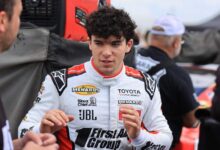
Forde also addressed a penalty that was improperly levied on Gio Ruggiero, who initially was ruled to have jumped a restart late in the Craftsman Truck Series race. After reviewing the incident, NASCAR determined that Ruggiero could have committed the violation because of a bump from Brenden Queen, but it was too late to rescind the penalty because Ruggiero had already pitted for four tires.
“At that point, it would have been impossible to rescind it because if we put him back where he was at the front row, he would have the tire advantage, and that wouldn’t be fair,” Forde said. “It was just too late, so we weren’t able to rescind that penalty. So we did talk to the crew chief, the driver and the team owner and apologized for that miscommunication.”
Senior director of racing communications Amanda Ellis and Forde also reviewed some of the format tweaks for the 19 drivers who already qualified for the final segment of Sunday‘s All-Star Race.
Those locked-in drivers also will be racing in the first two segments of the event, and there will be no backup car permitted for the third segment.
But if their primary cars sustain damage or a mechanical problem that can be repaired before the last segment, the eligible drivers will be allowed to start the last segment without penalty.
The episode also featured an interview with Dover Motor Speedway president Mike Tatoian about the track‘s on-site promotional plans for its first All-Star Race.
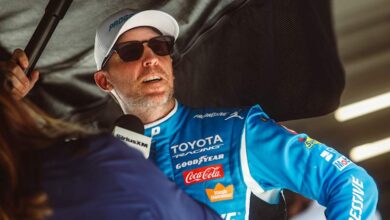
Other topics covered by Forde and Ellis during the 53rd episode of “Hauler Talk,” which explores competition issues in NASCAR:
—How the additional tire packs at Watkins Glen were received.
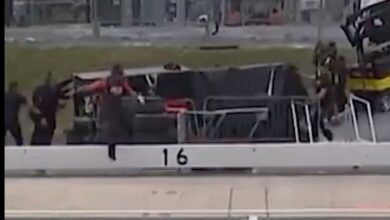
—The flying tent that caused a caution flag.
—The cars that were taken to the Research & Development Center after the Watkins Glen race.
<iframe data-testid=”embed-iframe” style=”border-radius:12px” src=”https://open.spotify.com/embed/episode/4DfHGdhZkL0N3bEqXIF4ew?utm_source=generator” width=”100%” height=”352″ frameBorder=”0″ allowfullscreen=”” allow=”autoplay; clipboard-write; encrypted-media; fullscreen; picture-in-picture” loading=”lazy”></iframe>
Nate Ryan has written about NASCAR since 1996 while working at the San Bernardino Sun, Richmond Times-Dispatch, USA TODAY and for the past 10 years at NBC Sports Digital. He is a contributor to the “Hauler Talk” show on the NASCAR Podcast Network. He also has covered various other motorsports, including the IndyCar and IMSA series.