Growing up, I played for the SWDHB, an unsanctioned local league rather than an official Little League. We wore t-shirts and our “Tigers” shirts had the generic script on them on a green, not blue, shirt, that was for the Ravens in the minor league division. When I made the all‑city travel team in the summer of 1993, the best part wasn’t the competition but the uniform swap: I would get to wear a Blue Jays button‑up jersey. It wasn't the button up quality that kids may receive these days, but it was my first one.
Image
Living so close to Canada, I grew up watching Molson Hockey Night in Canada on Saturday nights. The Red Wings‑Maple Leafs broadcasts, the packed Maple Leaf Gardens with “Mr. Sub” ads near the backboards by the goalie. We all went to Winsdor when we turned 19. Toronto was still four hours away but it was our first trek into Canada and in a time where the world, as I hate to say this because how cliche it is, felt bigger.
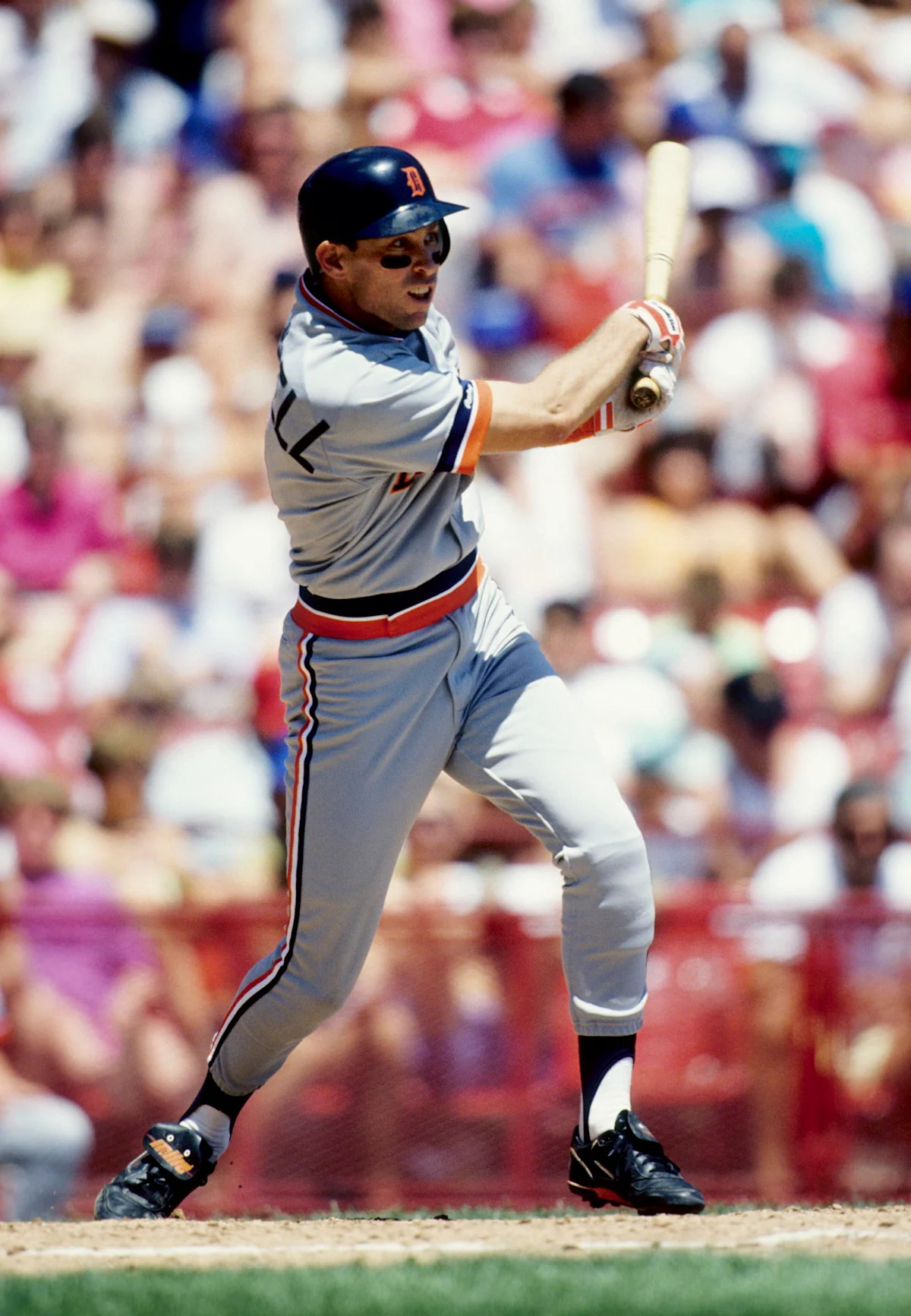
So for those who remember John Cerutti, Lloyd Moseby, David Wells and Junior Félix wearing both Blue Jays and Tigers jerseys, this is for you.
The 1980s rivalry
Detroit and Toronto spent most of the 1980s taking turns atop the American League East. Between 1983 and 1988 they never finished more than two spots apart in the standings. The climax came in 1987. Toronto held a 3½‑game lead with one week remaining, but injuries to catcher Ernie Whitt and shortstop Tony Fernández allowed Detroit to sweep the final head‑to‑head series at Tiger Stadium; the last game, a 1‑0 Tigers win on Oct. 4, completed a seven‑game Jays skid and swung the division to Detroit. Fernández’s absence was particularly costly.
In 1987 he set career highs in batting average (.322) and on‑base percentage and won his second Gold Glove, but on Sept. 24 he fractured an elbow when Tiger Bill Madlock clipped him during a double‑play attempt. Without their slick‑fielding shortstop, the Jays couldn’t hold off the Tigers.
When the Tigers were hanging on in 1991 in the AL East, being tied for the division league in late August, with one of the better lineups that the Tigers put out there that included former Blue Jays first baseman Cecil Fielder and the year he led the league in home runs and RBIs, Toronto was too deep and the Tigers faded late in the year on the dreaded Anaheim to Oakland west coast swing. In 1993, the Tigers were tied for first in late June but that faded first as the Tigers lost 10 in a row to end the month and never saw first place in the division that late in the season ever again.

The rivalry cooled when expansion sent the Tigers to the newly created AL Central in 1998, replacing the Brewers. Even so, the history built during those seasons — and the ease with which fans could drive the 230 miles along Highway 401 — kept Detroit‑Toronto games circled on calendars.
A Dominican talent pipeline
Toronto’s surge in the mid‑1980s wasn’t just about geography. The Blue Jays were among the first clubs to invest heavily in Latin America. Super scout Epifanio “Epy” Guerrero built a player‑development academy outside Santo Domingo in 1977; Toronto began using the complex in 1981, and the idea soon spread across baseball. Guerrero signed or recommended a who’s‑who of Toronto stars: he urged the club to pluck George Bell, Manny Lee and Kelly Gruber in the Rule 5 draft and pushed for trades that brought in Roberto Alomar, Fred McGriff, Juan Guzmán, Dámaso García and others. He also discovered Tony Fernández, paying for knee surgery to repair a limp before signing him, and converted Pat Borders from third base to catcher.
Fernández became the face of that pipeline. In 1986 he led the league with 687 at‑bats and was third in hits with 213 — the first Blue Jay to top 200 hits and, at the time, a major‑league record for a shortstop. He earned four consecutive Gold Gloves from 1986‑89 and was a catalyst for Toronto’s first AL East title in 1985. Even after being traded to San Diego in 1990, he returned in 1993 and hit .306 in the regular season before batting .333 in the World Series, helping Toronto win back‑to‑back championships. Along with fellow Dominican standouts like García and Bell, Fernández gave Toronto athleticism and depth that Detroit never matched.
Toronto’s head start and Detroit’s late response
Toronto’s pipeline, built by Guerrero, produced stars like Fernández, Bell and Alomar and supplied the Blue Jays with a steady flow of cost‑controlled talent throughout the 1980s and early ’90s. Detroit, by contrast, had little infrastructure in Latin America at that time. Detroit was always a late bloomer in international operations and lagged far behind the rest of the majors until Randy Smith became general manager in 1996, who started at least, trying to put together the framework a farm system that would start finally using basic tech like computers.
Peña signed useful players such as Ramón Santiago, Fernando Rodney and José Lima, giving Detroit its first meaningful foothold. But Smith was essentially starting from the ground up. Years of neglect to the Tigers system cost them the depth they needed to keep up with the Jays.
Cito Gaston’s leadership
Another turning point came in May 1989. After a 12‑24 start, the Blue Jays fired manager Jimy Williams. Hitting coach Clarence “Cito” Gaston initially declined the job, but players and executives — including Tigers skipper Sparky Anderson — persuaded him to take over. Under Gaston, Toronto went 77‑49 and won the AL East. He brought a calm, paternal style; Tony Fernández said Gaston’s father‑like approach allowed him to handle 25 different personalities. To me, he was similar to Sparky Anderson because like Anderson, gave credit to the players to help develop a culture.
The Jays finished second in 1990, reclaimed the division in 1991, and then captured the franchise’s first World Series titles in 1992 and 1993. Gaston thus became the first African‑American manager to win a World Series.
Why the rivalry endures
The Tigers–Blue Jays matchup still resonates. It isn’t the same rivalry it once was, there isnt the same amount of former players wearing the jerseys but seeing Jays fans take over Comerica Park triggers member berries. Toronto’s return to its classic jerseys only heightens that nostalgia, even as the Tigers wore their new orange tops on Friday.
Follow me on "X" @rogcastbaseball