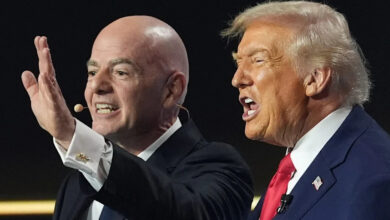
Ahead of its annual congress last week in Vancouver, the FIFA Council approved a 15% increase in financial distributions to teams participating in this summer’s World Cup. The bump ensures that each of the 48 participating member associations will receive a minimum of $12.5 million in preparation and qualification money. Teams that advance beyond the group stage will receive additional prize money.
The increase, which brings total distributions to $871 million, comes after federations expressed concern that the initial distributions could fail to even cover the costs of participating in the competition, particularly given the significant tax exposure associated with playing in the U.S.
But increasing distributions isn’t the only way FIFA is seeking to mitigate the impact of the U.S. tax burden on both its members and itself. The governing body is engaged in a formal effort to seek tax-exempt status for as many of the member associations as possible ahead of the competition.
In a March memo obtained by Sports Business Journal, FIFA offered to provide “support to teams that desire to seek an exemption from U.S. federal and state income tax.” The governing body said achieving that status would “eliminate FIFA’s withholding tax obligations as well as your team’s final tax liability at the U.S. federal [level] and in most states with respect to the receipt of prize money.”
In addition to prize money, federations will be taxed on sponsorship income and earnings from any other commercial activity conducted while playing in the U.S.
The memo called on federations interested in receiving “FIFA’s paid tax support” to opt in by April 3. FIFA declined to comment on how many federations have sought its support.
The Guardian reported last week that FIFA was “poised to secure a last-minute tax exemption for all 48 World Cup qualifiers after intensive negotiations with the U.S. treasury.” SBJ could not verify that claim, however. FIFA declined to comment, while the IRS did not respond to an inquiry.


Several tax professionals were skeptical that the federations would qualify for tax-exempt status, given that they engage in commercial activities such as the sale of sponsorship and broadcast rights. They also expressed concern about the tight timeline under which FIFA is seeking exemptions.
“I think it’s too close, put it that way,” said Rita Ryan, an international tax adviser based in Boston. “I don’t think that will happen before the World Cup starts.”
The IRS does offer expedited processing for entities that can demonstrate a “compelling reason,” but that is subject to the agency’s discretion.
===
More from Sports Business Journal
-
Disney/ESPN yet to engage NFL on early media rights renewal
-
Yankees, New Era to mark 30 years of Spike Lee red cap
-
It all adds up, or at least it better, for numbers whiz John Henry
===
FIFA has enjoyed tax-exempt status in the U.S. since the 1994 World Cup, so it is not expected to pay federal taxes on most of the revenue it generates in America. That status also exempts the nonprofit governing body from state taxes in all host jurisdictions except Washington state.
Even so, obtaining tax-exempt status for the member federations would further benefit FIFA by eliminating the obligation to withhold taxes on payments to the teams. FIFA acknowledged this in its March memo.
“The one that benefits the most is FIFA because their withholding obligations completely disappear overnight,” said Oriana Morrison, a U.K.-based accountant who has worked with European and South American soccer federations and clubs on U.S. tax issues, including for last summer’s Club World Cup.
Story continues below
For some participating federations, securing a federal tax exemption could be the difference between profiting and breaking even by participating in the competition.
About half of the teams hail from countries that have double tax treaties with the U.S., which can allow them to avoid U.S. federal taxation on prize money. Six of the nine states hosting matches also honor those treaties, mitigating state tax obligations. While players for those countries would still be taxed on their earnings, coaches and support staff can qualify for exemptions at the federal level.
For federations representing countries without such an agreement with the U.S., however, the tax burden could be significantly higher. In addition to being subject to 21% corporate income tax on net income, those teams may also face tax obligations in their home countries, and profits remitted from the U.S. can be subject to a 30% branch profits tax. Every member of a team’s delegation, from the star players to a kit manager, also could be subject to federal taxation.
The cohort that lacks these treaties is largely from Africa, South America and the Middle East, and includes some of the smallest economies in the competition.
“For a country like Haiti, Bosnia and Herzegovina, Curaçao, Cabo Verde — the new ones that are participating — [this prize money] is probably the most they’ve ever made,” Morrison said. “But if they are from a country that doesn’t have this tax treaty in the U.S., they are going to end up with very little of it.”
***
Start your day with SBJ Morning Buzzcast, bringing you the hottest stories in sports business every morning in under 15 minutes. Sign up for SBJ’s free newsletters, and dive deeper inside the industry with all the latest sports business news here.