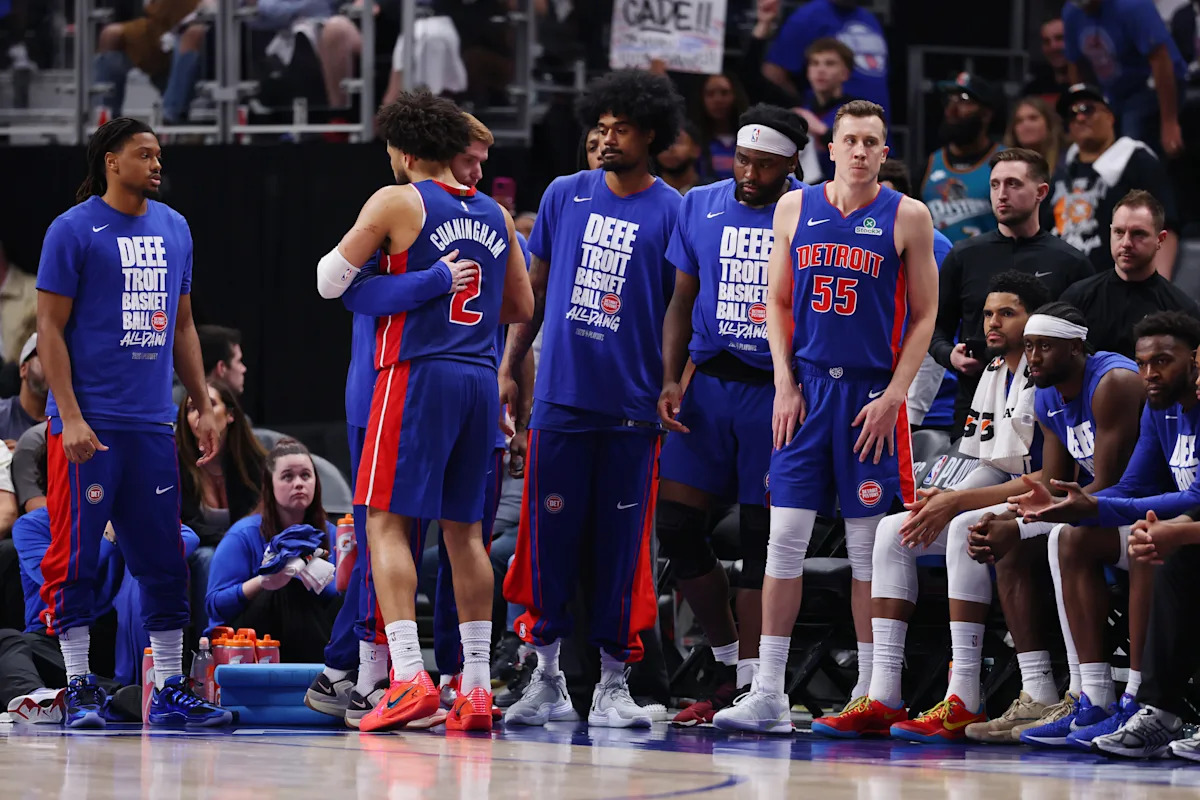
As the NBA trade deadline approached in early February, the Detroit Pistons were cruising toward the Eastern Conference’s No. 1 seed while the Cleveland Cavaliers found themselves in a dogfight for home-court advantage in the first round of the playoffs.
For Cleveland, the stakes were sky high: If this roster didn’t advance deep into the postseason, everything would be on the table, from firing coach Kenny Atkinson to parting ways with star guard Donovan Mitchell. In Detroit, the vibes were much different. Despite a huge leap last season, nobody expected the Pistons to ascend to the top of the East this quickly. The No. 1 seed felt like a bonus.
At that moment, the two teams took very different paths. Sensing the need to shake things up, Cleveland took a huge swing, pairing Mitchell with James Harden to create one of the league’s most dynamic offensive backcourts. Detroit, ensconced in the comfort of having home-court advantage throughout the East playoffs, made a minor deal for Kevin Huerter to add some shooting to its bench.
Guess which team likes its choice better today.
If there’s a lesson to be learned from the Cavaliers’ 125-94 win Sunday night in Game 7 of the Eastern Conference semifinals, it’s this: In the modern NBA, there’s no time to waste.
Windows are too short. Salary caps are too punitive. And when you have a chance to improve an already good team, you ignore it at your own peril.
Yes, it’s much easier after a Game 7 beatdown to say the Pistons should have done something more significant to bolster their roster 2 ½ months ago when it looked like they were dominating the Eastern Conference.


But it was also foreseeable that a relatively young team led by a star in Cade Cunningham and a bunch of role players would eventually run into a playoff opponent with a little more postseason juice.
In the NBA most of us grew up with, such an ignominious playoff exit would be viewed as a step in the progression toward true contender status. But that NBA no longer exists. With a restrictive salary cap, young players starting to come up for contract extensions and no prime draft picks on the horizon, getting Cunningham enough help to compete for a title will require some good fortune and a deft front office. There’s no guarantee Detroit will have another Game 7 at home for a spot in the Eastern Conference finals anytime soon.
In this NBA, for any team with a legitimate chance to make a deep run, the only window that matters is right now. Cleveland recognized it and capitalized. Detroit chose to be a trade-deadline bystander and got embarrassed on its home floor in a Game 7.
It’s the outcome the Pistons’ front office deserved. In this era, you can't just sit around and wait when you have a chance.
Playoff narratives, of course, are admittedly fickle. If the Cavaliers had lost Sunday, we would have ripped them for betting on a notorious playoff underperformer in Harden and spent the next several weeks speculating about Mitchell’s next trade destination. After losing Game 6 at home, it would have been an unforgivable postseason collapse.
But we can only react to the reality in front of us, and it’s clear now that Cleveland made the right move to deal Darius Garland at the deadline for Harden despite having to part with a talented player 10 years younger. While Harden was not the difference in the series — he finished with nine points in Game 7 on 2-of-10 shooting — it’s fair to say Cleveland’s theory of the case was the correct one.
In an Eastern Conference that seemed there for the taking, parting with an elite young guard for a former league MVP was the correct bet. It may not look good next year or whenever the Cavs have to rebuild, but it’s paying dividends right now with a team that saw a clear opportunity to do something significant before the salary cap made it impossible to improve the team.
Detroit had that same chance this year and only added Huerter, who played 47 total minutes in the postseason.
The Pistons are going home. Cleveland is moving on. And if Detroit finds itself in a similar position next season, getting Cunningham more help — whatever the cost — should be the top priority.
If not, the pain of Sunday’s Game 7 embarrassment will all have been for nothing.