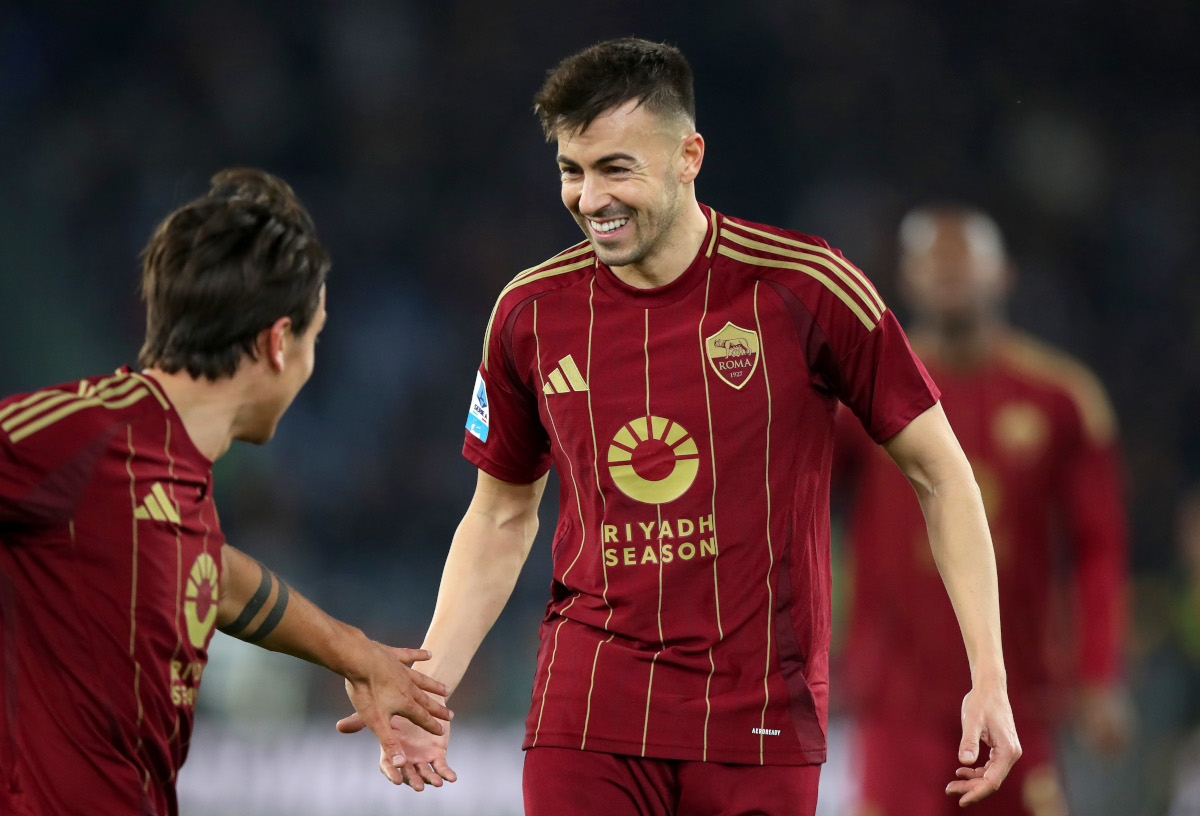
Stephan El Shaarawy has confirmed he will leave Roma when his contract expires on June 30, bringing the curtain down on a decade-long association with the Giallorossi that has made him one of the most beloved figures in the club’s recent history.
The winger made the announcement officially, with two matches remaining, a derby against Lazio and a final day trip to Verona, before he departs the Italian capital as a free agent.
LECCE, ITALY – JANUARY 06: Lameck Banda of US Lecce competes for the ball with Stephan El Shaarawy of AS Roma during the Serie A match between US Lecce and AS Roma at Stadio Via del Mare on January 06, 2026 in Lecce, Italy. (Photo by Maurizio Lagana/Getty Images)
El Shaarawy ends decade-long Roma spell with 65 goals and a Conference League title
El Shaarawy first joined Roma in January 2016 following a spell at Monaco, having previously established himself as one of Serie A’s most exciting young wingers at Milan.
He left for Chinese side Shanghai Shenhua in the summer of 2019 before returning to the club in January 2021, and has remained a fixture in the squad ever since.
View this post on Instagram
Across his two spells in Rome, the Italian international of Egyptian descent made 346 appearances for the club, contributing 65 goals and 50 assists. The highlight of his time at the Stadio Olimpico came in 2021/22, when Roma won the UEFA Conference League under José Mourinho, the club’s first European trophy in 61 years.


His departure had appeared likely for some time, with coach Gian Piero Gasperini understood to have pushed for renewals for El Shaarawy and three other out-of-contract players earlier this month. The winger’s announcement suggests those efforts have not resulted in an agreement.