A historic 2026 WNBA season has arrived.
After an offseason delayed and then compressed by contentious labor negotiations, the WNBA season is set to start Friday—on time and as scheduled.
Players have seen a steep increase in their pay. The minimum salary has increased from $66,790 to $270,000, with the salary cap five times larger this year compared to last season.
But the new collective bargaining agreement will have ripple effects that will first be seen this year. Here are some of the key storylines to watch entering the 2026 WNBA season:
A Post-CBA World
The CBA is not just about increased salaries; it sets the rules that govern the sport. There have been significant changes across the board, including the addition of the EPIC deal and two new developmental roster spots for each team.
The EPIC rule allows players entering their fourth year to renegotiate their rookie contracts to earn max or supermax deals worth 20% of the salary cap. Players who made an All-WNBA team in their first three seasons are eligible for a max deal, while those who win MVP can sign a supermax.
Teams have two developmental roster spots this year that can play up to 12 games per season. These players will not count towards their salary cap.


General managers have had limited time to understand the new rules. Indiana Fever GM Amber Cox said that huge paydays for young stars like Aliyah Boston and Caitlin Clark are something they need to account for when building their roster long term. Golden State Valkyries GM Oheema Nyanin said her controversial draft night trade of Flau’jae Johnson—for a player she later cut—was due to “cap flexibility.”
The regular season will be another indication of the CBA’s impact. How will teams approach what’s normally a quiet trade deadline with most of the league now on multiple-year contracts? How will draft picks be valued in trades, especially as the league continues to expand? Will there be any developmental players that will break out and earn a full-time roster spot?
The next few months could answer those questions.
Expansion Teams
The Toronto Tempo and Portland Fire are officially part of the WNBA, the 14th and 15th teams, respectively. The Tempo debut Friday against the Washington Mystics, while the Fire host the Chicago Sky on Saturday.
The WNBA held an expansion draft for the Tempo and Fire on April 3, a few days before the 2026 rookie draft. The key players selected were Minnesota Lynx forward Bridget Carleton for the Fire and Connecticut Sun wing Marina Mabrey. Both signed seven-figure deals.
The expectations are slightly different for both teams. The Tempo may be looking to be this year’s version of the Valkyries, who made the playoffs in their inaugural season, setting attendance records in the process.
Toronto signed All-Star Brittney Sykes to a two-year, $2.4 million deal and have WNBA champion coach Sandy Brondello on the sidelines. According to most sportsbooks, they have the 11th-best chances of making the playoffs—hardly a longshot in a 15-team league where eight teams make the postseason. But the Fire may be looking ahead to the 2027 WNBA draft that could feature JuJu Watkins, Hannah Hidalgo, and Madison Booker. They did not make any major free agent signings and are widely believed to be the worst team in the league.
Eyes will also be on the three new expansion teams coming in Cleveland (2028), Detroit (2029), and Philadelphia (2030), as well as the move of the Connecticut Sun to Houston next season.
Media Partners
The WNBA was included in the NBA’s 11-year media deal, securing $2.2 billion from Disney, NBCUniversal, and Amazon. But the WNBA has several other media partners as well, including Paramount (CBS), Versant (USA Network), ION, and NBA TV.
The WNBA is estimated to be raking in about $260 million under the new deal, more than four times of its previous deal that was about $60 million per year—a key reason that salaries increased so much.
Between all their networks, there will be a record 216 WNBA games and events on national broadcasts this season.
The NBA has seen viewership increases under its new media deal, but the fan response to the extensive fragmentation will be worth watching. So will the differences in broadcasts between longtime partner ESPN and WNBA newcomers like NBC and USA Network.
One-Year Watch
While many players got seven-figure paydays this year, there are some stars who signed one-year deals and will be free agents again next year. This season may determine if they decide to stay put or find a new home.
The most prominent 2027 free agent will be Lynx star Napheesa Collier, who will miss the beginning of the season due to offseason surgery on both her ankles. She signed a one-year, $1.4 million supermax deal for this season.
In an interview with NPR released Wednesday, Collier didn’t give a direct answer when asked why she only signed for one year.
“I’m so focused on the now,” Collier said. “I just came off two ankle surgeries. I’m trying to get back on the court. This was such a whirlwind, with the CBA going on and all these things, everything was happening so fast.”
Other notable players who will be free agents next offseason:
-
Kelsey Mitchell, Indiana Fever
-
Jackie Young, Las Vegas Aces
-
Kelsey Plum, Los Angeles Sparks
-
Nneka Ogwumike, Los Angeles Sparks
-
Kayla Thornton, Golden State Valkyries
-
Brittney Griner, Connecticut Sun
New Beginnings for Caitlin Clark, Angel Reese
The new CBA, with salaries quintupling, has cemented the rise of women’s basketball. Debates about who gets credit, however, have quieted somewhat.
Credit has been showered on Caitlin Clark, undoubtedly the most-watched player in all of women’s basketball. Others suggest Angel Reese, the most-followed WNBA player on social media, played a role, while current players and longtime fans have emphasized the value of the players who paved the way through WNBA’s 30-year history.
Regardless of the debate, both players will be worth paying close attention to this season because they’ll be facing new challenges.
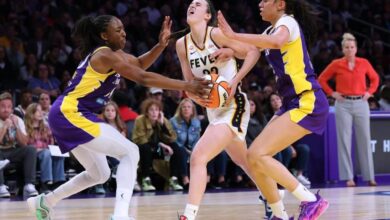
For Clark, she will return from an injury that limited her to just 13 games in 2026. The star guard has never had to return from such a long break—she played all her college games at Iowa—and will carry the Fever’s lofty championship expectations.
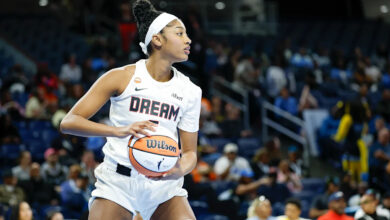
Reese is joining a completely new team after a surprising offseason trade to the Atlanta Dream. She joins a stacked roster with Allisha Grey and Rhyne Howard that won more than 30 games last year, and Reese could be the missing piece to get them over the hump.
The post WNBA Season Arrives On Time And in a New CBA World appeared first on Front Office Sports.