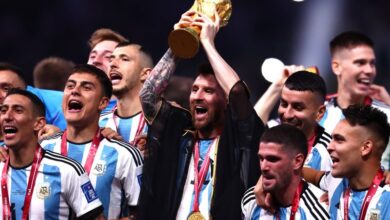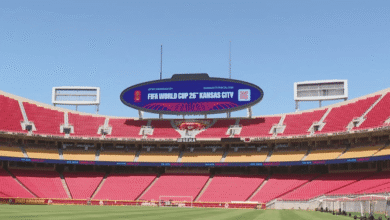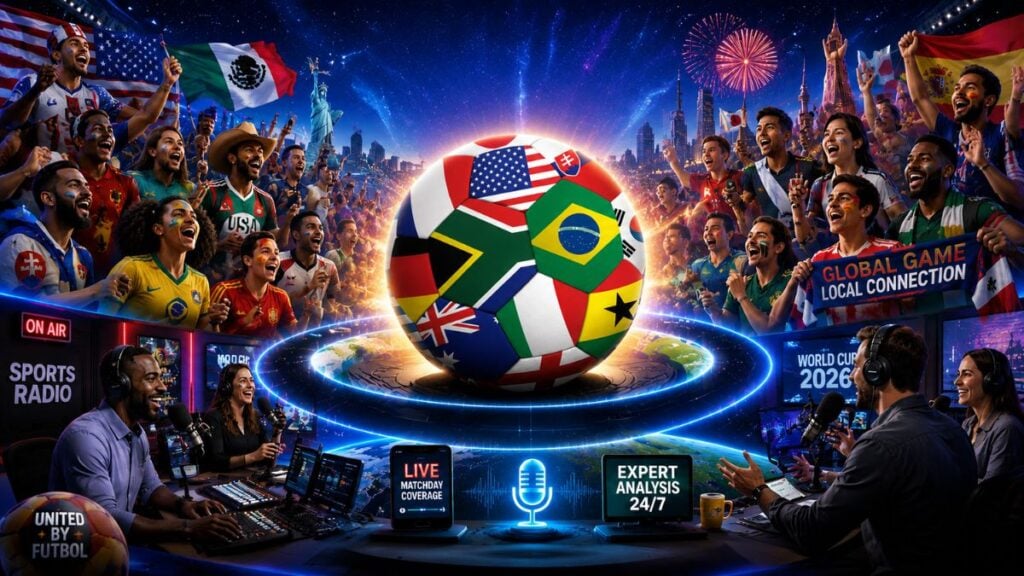
The World Cup is too big to ignore. Whether soccer is a primary passion point for your local audience or barely registers outside of major international moments. The tournament creates something sports radio brands spend years chasing: shared attention.
For a little over a month, sports fans, casual viewers, advertisers, social media users, and even people who rarely watch sports will all be discussing the same event at the same time. That matters.
When the FIFA World Cup arrives in North America next month, the sports conversation will shift. Bars will host watch parties. Retail stores will sell merchandise. Social feeds will become flooded with highlights, flags, reactions, memes, and debate. Even people who haven’t watched a soccer match since the last World Cup will suddenly know when the United States Men’s National Team (USMNT) is playing.
Sports radio brands should recognize what that means.
Last week, FOX Sports and iHeartMedia announced a partnership that will make every FIFA World Cup 2026 match available on iHeartRadio. More than 100 stations, including FOX Sports Radio affiliates, are expected to carry every United States match along with the World Cup Final. That announcement immediately created a new conversation inside iHeart programming departments across the country.
Should local stations lean into the World Cup and carry the games?
Timing = Opportunity
For some programmers, the answer comes naturally. Markets with strong soccer communities or diverse international populations may see obvious upside. Others may question whether the event truly fits their audience. If your listeners primarily care about football, baseball, or local college athletics, how much energy should be invested into a global soccer tournament?


The answer probably depends on your market. But the larger takeaway shouldn’t.
Whether or not the World Cup is a perfect format fit for your station, there’s value in finding a way to own part of the moment. The timing alone creates opportunity.
The tournament lands during one of the quieter stretches of the sports calendar. By mid-June, the NBA Finals and Stanley Cup Playoffs will be over. The NFL remains weeks away from training camp. Major League Baseball carries the daily load, but outside of a handful of markets, there’s room for additional programming opportunities.
That opens doors for stations looking to create unique experiences.
If your iHeart station doesn’t hold rights to major local teams, carrying World Cup matches may become attractive filler with legitimate audience interest attached to it. Several United States pool matches fall into favorable programming windows, including late evening opportunities and a Friday afternoon showcase. Those aren’t insignificant details.
A Friday afternoon United States match creates more than programming inventory. It creates promotional inventory. Watch parties at local bars, sponsorship integrations, branded giveaways, live broadcasts, and social engagement campaigns suddenly become easier to execute because the audience already has emotional investment in the event.
Branding Exclusivity
National pride still works, especially in sports radio.
Whenever Team USA competes on the global stage, people rally around it. They may not know every player on the roster or fully understand the nuances of the sport, but they understand the stakes. The United States versus the world remains a compelling hook.
That’s where stations can benefit even if they don’t expect massive ratings spikes.
Realistically, no programmer should expect World Cup broadcasts to suddenly double cume numbers. But that doesn’t mean the event lacks value. Sometimes the greatest benefit isn’t immediate ratings growth. It’s brand positioning. Being associated with major moments matters.
When listeners search for coverage of the biggest sporting event happening on the planet, does your station feel connected to that conversation or absent from it? That distinction shapes perception. Even casual participation can reinforce the idea that your brand is plugged into the larger sports world.
That participation doesn’t necessarily require wall-to-wall soccer talk either.
The stations that execute best will likely be the ones that understand how to complement the event instead of forcing themselves to become something they’re not. Your hosts don’t need to suddenly transform into tactical soccer analysts or a reincarnated Pelé himself. But acknowledging the tournament, discussing major storylines, reacting to dramatic moments, and creating audience interaction around the event all help keep your brand culturally relevant during the tournament window.
Digital Moment
The real opportunity may exist even more on digital and social platforms.
The World Cup is built for social engagement. Goals become instant viral clips. Upsets dominate trending topics. Fans share reactions in real time. Stations that prepare creative assets, branded graphics, scoring alerts, memes, and audience engagement strategies ahead of time position themselves to benefit from that activity.
Does your station have goal graphics ready to publish seconds after the United States scores? Are your personalities contributing reactions during matches? How about creating content people can repost and attach themselves to? Are advertisers integrated into the experience?
That preparation separates stations that simply acknowledge the World Cup from stations that actually capitalize on it. Even for stations without broadcast rights, there are still countless ways to participate. Watch parties, podcasts, social-first content, short-form video, listener interaction, sponsorship campaigns, and live reaction segments all provide avenues to connect with audiences during the tournament.
That’s ultimately the bigger point.
You don’t have to become a soccer station to benefit from the World Cup. You also don’t have to be an iHeart sports station with rights opportunities to stand out. But when an event captures worldwide attention for over a month, there’s value in making sure your brand has some connection to the experience.
The stations that succeed won’t necessarily be the ones with the deepest soccer knowledge. They’ll be the ones that recognize the scale of the moment and strategically find a way to insert themselves into it. The World Cup only comes around every four years.
Completely ignoring it may end up saying more to audiences than participating ever would.
Barrett Media produces daily content on the music, news, and sports media industries. Sign up for our newsletters to stay updated and get the latest information right in your inbox.
John Mamola
John Mamola
John Mamola is Barrett Media’s sports editor and daily sports columnist. He brings over two decades of experience (Chicago, Tampa/St Petersburg) in the broadcast industry with expertise in brand management, sales, promotions, producing, imaging, hosting, talent coaching, talent development, web development, social media strategy and design, video production, creative writing, partnership building, communication/networking with a long track record of growth and success. He is a five-time recognized top 20 program director in a major market via Barrett Medi’s Top 20 series and has been honored internally multiple times as station/brand of the year (Tampa, FL) and employee of the month (Tampa, FL) by iHeartMedia. Connect with John by email at John@BarrettMedia.com.
linktr.ee/johnmamola
The post The World Cup Is a Marketing Goldmine Sports Radio Cannot Ignore appeared first on Barrett Media.