Sparky Anderson helped make the phrase “You can’t tell anything about a baseball team until 40 games have been played” part of the baseball lexicon in Detroit. Technically, I am two games late on that checkpoint, but the larger point still applies: it is time to take a closer look at where this Tigers club stands. Plus. 42 is a cooler number. Jackie Robinson wore it.
The injuries have made that evaluation more difficult. Across the major league roster and the minor league system, the Tigers have 65 players on the injured list, which has affected the day-to-day operation of nearly every affiliate. The Double-A Erie SeaWolves are down four starting pitchers and West Michigan has had six outfielders on the injured list.
Still, the number that continues to follow this team is its record since last July, and for good reason. That stretch remains tied to the collapse that cost Detroit its lead in the AL Central and allowed Cleveland to take control of the division.
Even with the Tigers advancing to the ALDS against Seattle, the flaws were still there. The offense showed its limitations, and the pitching staff exposed how thin the depth had become. Now, fast forward to a 19-21 record heading into tonight, and the question becomes: what is underneath that win-loss record?
A plus-3 run differential? Sure, that matters. Kevin McGonigle winning AL Rookie of the Month and signing a long-term deal? That matters, too. But beyond that, what have the Tigers done to keep fans invested in the next step?
That may sound a little dramatic, but it is not an unfair question. Tigers fans have seen the rebuild, the breakthrough, and the postseason appearance. Now they want to see the next evolution. They want to see what turns this from a team with interesting pieces into a team that looks built to win consistently.
There are a few players who fit that next part of the conversation — the ones who could provide some of that winning “shine,” for lack of a better word, and help push the Tigers toward something more sustainable.

Riley Greene
Riley Greene is one of the clearest examples of what the Tigers need the next version of this roster to become. The power is no longer a projection. Greene already showed that in 2025, when he hit 36 home runs, drove in 111 runs and won his first Silver Slugger. That season helped answer whether he could become a real run-producing bat in the middle of Detroit’s lineup.
The next question is whether he can become a more complete hitter.
So far in 2026, the numbers point in that direction. Greene entered play hitting .317/.418/.490 with a .907 OPS through 41 games. The home run total is not pacing the same way it did during his 2025 power jump, but the overall offensive profile looks cleaner. His on-base percentage is up more than 100 points from last season, and he already has 25 walks after drawing 46 all of last year.
That matters for a Tigers team still trying to find its next offensive identity. Greene does not have to be only a power bat. If this version holds, he becomes something more valuable: a hitter who can lengthen at-bats, get on base, still drive the baseball and give the Tigers a stable presence near the top or middle of the order.
The swing-and-miss has not gone away. Greene struck out 201 times in 2025 and still has 47 strikeouts through 170 plate appearances this season. But the difference is what surrounds those strikeouts. He is chasing less, walking more and producing a stronger overall line. Statcast also reflects the change, with Greene already at 11 batting run value in 2026 after finishing at 16 last season.
For a team looking for its next evolution, Greene fits the conversation. The Tigers have already seen the raw power version. What they need now is the more refined version — the player who helps move the offense from flashes of damage to something more dependable. Early in 2026, Greene has looked closer to that player.
Dillon Dingler
Dillon Dingler fits this conversation, even if the last few weeks have been uneven. The slump is real, but so is the overall step forward. Through 35 games, Dingler entered this stretch hitting .232 with six home runs in 139 plate appearances, according to FanGraphs. That does not scream finished product, but for a young catcher still settling into the job, the power and production have given Detroit something to build around at a premium position.
That is why his home run tonight mattered beyond one swing. Dingler got Detroit on the board with a solo homer to left field against the Mets in the second inning, giving the Tigers a 1-0 lead. For a player fighting through a rough patch, those are the kinds of swings that can help reset the conversation a bit.
The Tigers do not need Dingler to be a finished offensive product right now. They need him to keep making enough impact contact, handle the position and give the lineup another source of damage. If the strikeouts and cold stretches remain part of the profile, that is something Detroit will have to live with. But the power is real enough to keep pushing him as part of this next group.
Keider Montero's evolution
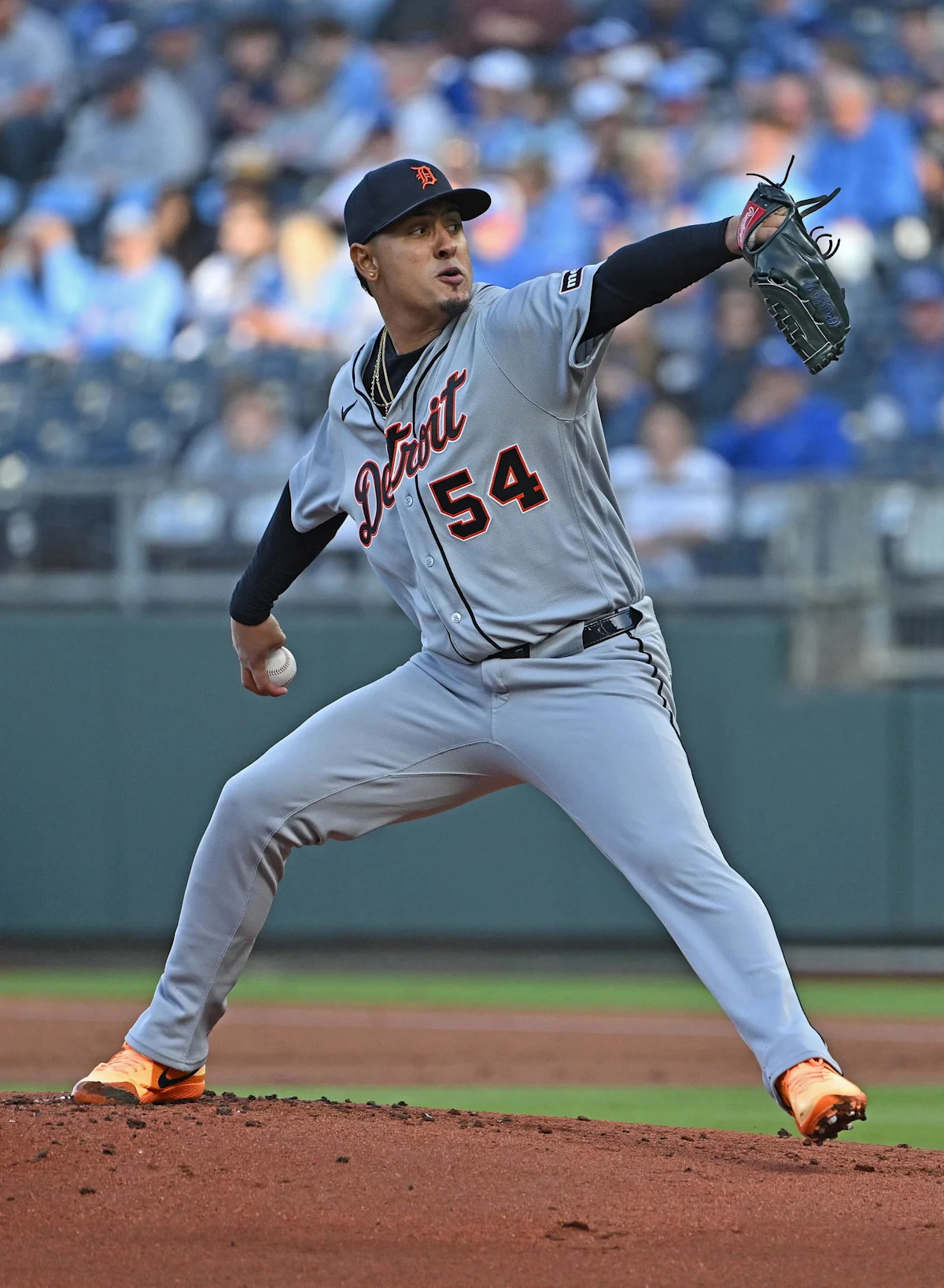
Keider Montero may be the more important part of this stretch. With the Tigers’ pitching depth tested across the organization, Montero has been one of the arms holding the rotation together. He is not being asked to be Tarik Skubal or a top-of-the-rotation answer. He is being asked to take the ball, give Detroit innings and keep games from getting away early.
Montero’s last three starts, show the point: six innings of one-run ball against Kansas City, 6 2/3 innings of one-run ball against Texas and five innings with three earned runs against Cincinnati. That is 17 2/3 innings with five earned runs over three starts, which comes out to a 2.55 ERA in that span.
For the season, Montero has made seven starts with a 2-2 record, 3.18 ERA, 39 2/3 innings, 29 strikeouts and a 0.96 WHIP. Those are not just “survive the day” numbers. Those are useful major league innings from a pitcher who has helped keep the Tigers from completely scrambling while the rotation has dealt with injuries and uncertainty.
That is where the Tigers are right now. The flaws are still there. The offense can still go quiet. The pitching staff has been stretched. The defense has not always helped. This is not a team that has answered every question just because a few young players have had moments.
But the division remains winnable, and that matters. Detroit does not have to be perfect to stay in the AL Central race. It does, however, have to take another step if the goal is bigger than simply hanging around. The Tigers can be good enough to compete in this division and still not be close enough to the true American League powerhouses. Those are two different conversations.
That is why players like Greene, Dingler, Montero and eventually Troy Melton matter. Melton is working his way back from right elbow inflammation and has already moved his rehab assignment up to Triple-A Toledo, which puts him closer to becoming another internal option for a staff that needs reinforcements.
The Tigers are not without answers. They just need more of them to become dependable. Greene’s more complete offensive profile, Dingler’s power at catcher, Montero’s ability to stabilize the rotation and Melton’s potential return all fit into that next-step conversation.
If Detroit wants to move from a team trying to win a winnable division into one that can push toward the top of the American League, this is the group that has to help bridge that gap.
Follow me on "X" @rogcastbaseball