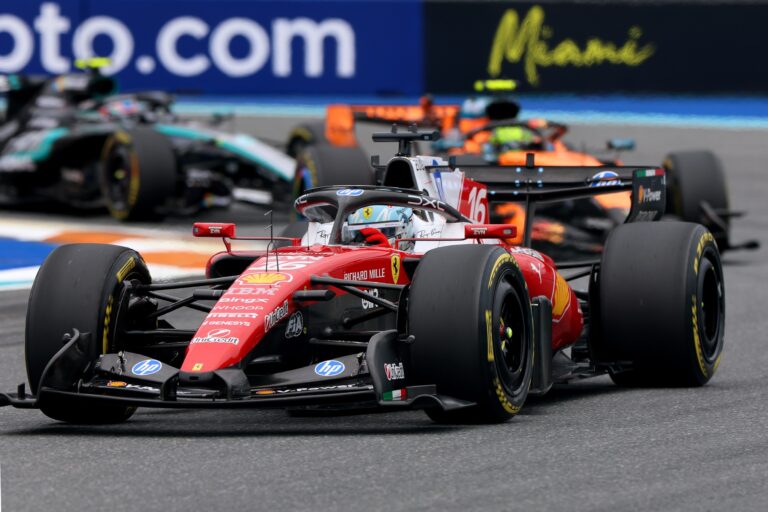
The Miami tweaks were a start. The FIA has now confirmed they were not the finish. Following an online meeting following the US race with all 11 team principals, Formula One Management, and the five power unit manufacturers, the governing body has agreed in principle to a set of hardware changes for 2027.
The big news comes in the form of a nominal increase in ICE power of approximately 50kW alongside a fuel-flow increase, with a corresponding reduction in ERS deployment power of roughly 50kW.
The combustion side goes up, the electrical side comes down. The sport is, essentially, admitting that the 50-50 split it wrote into the 2026 regulations was too aggressive. And that admission has been a long time coming.
The 2026 rules introduced new hybrid engines built around a near-50:50 split between electrical and combustion power, and the problems were apparent from the first weekend in Australia.
Deployment of energy became such an important performance differentiator over a qualifying lap that drivers found themselves rewarded for driving to the power unit’s algorithm rather than the limit of grip, using high-speed corners to harvest energy rather than push, in order to deploy on the straights.
Max Verstappen called it “Formula E on steroids.” Reigning champion Lando Norris, after finishing second in Miami, said the Miami changes were “a small step in the right direction, but not to the level that Formula 1 should still be at yet.”
The Miami Package Helped, But Didn’t Fix It
Qualifying energy harvesting was dropped from 8 megajoules to 7, superclipping increased from 250kW to 350kW, and race starts now include a minimum MGU-K acceleration threshold to prevent drivers getting bogged down off the line.


The FIA considers those changes a success, and the meeting following Miami opened with a review that deemed the package an improvement with no material safety concerns identified.
Drivers near-universally said the changes made one-lap pace feel closer to traditional F1. The race, while much better, still featured some yo-yoing.
“It’s not fixed the problem or all the problems, but it’s helping with one. The races are basically exactly the same,” McLaren driver Oscar Piastri said.
He also warned that the difference in closing speeds could still be “huge,” making it “incredibly tough” to anticipate the moves of an attacking driver, which was precisely the safety concern flagged after Oliver Bearman’s 50G crash at Suzuka.
Further Work Still Needed Before Anything Is Official
The agreement reached this week is in principle only. Further detailed discussion in technical groups made up of teams and power unit manufacturers is required before the final package is decided.
The next step is to formally present these regulatory changes for a World Motor Sport Council e-vote, once the power unit manufacturers have voted on the package.
More immediate tweaks are also still in progress, so improved start-safety revisions and wet-weather measures from the Miami package continue to be refined and will be communicated to teams once fully explored and defined.
None of this is fast. Manufacturers will need to design and produce hardware around a revised power balance, and with engines homologated under strict rules, the path from “agreed in principle” to cars on track in 2027 runs through months of technical working groups, regulatory votes, and supply logistics.
Ferrari, for example, who supply engines to Haas and Cadillac, would need to offer their customer teams the same ICE specification they run themselves before an upgraded unit can be introduced.
Still, the direction is damn clear. The FIA spent years designing a 50-50 hybrid formula and four races watching drivers hate it. Moving ~50kW from the battery to the combustion engine is a start, and now 2031 will see V8s return with “minimal” electrical power.