Want to get more Covers content? Add us as a preferred source on your Google account here.
The WNBA season opened with exactly the kind of chaos bettors were hoping for.
Through 11 games, we saw expansion franchises make their debuts, a title contender get embarrassed on its own floor before responding 24 hours later, and rookie stars immediately looking comfortable in massive moments.
For anyone making WNBA picks this season, the first few days gave us plenty to work with, and a few reminders not to overreact too quickly.
The scoring was higher than expected, the overreactions started instantly, and sportsbooks are already adjusting after one of the loudest opening weekends the WNBA has had in years.
Here are five early betting takeaways from the WNBA’s opening weekend.
1. WNBA totals may take time to catch up
If opening weekend was any indication, WNBA totals may still be too low.


Nine of the league’s first 11 games featured at least 46 combined free throws, a massive jump from last season’s average of just 37 per game. Whether it’s a point of emphasis from officials or simply early-season whistle tendencies, the extra trips to the line completely changed the flow — and scoring — of several games.
Just before the season tipped off, Napheesa Collier publicly criticized the WNBA for being “too physical,” saying it hurt offensive flow, increased injuries, and made the game less enjoyable to play. Maybe the league took that to heart, because opening weekend felt noticeably tighter from an officiating standpoint.
And the scoring surge wasn’t isolated to one matchup.
Through the first two days of the season, WNBA teams averaged 87.4 points per game — the highest scoring output through the opening two days of any regular season in league history.
For fans, constant whistles aren’t exactly ideal viewing. For bettors? It creates a terrifying environment for Under tickets.
And it’s not just officiating driving the scoring spike. The overall talent level across the WNBA continues to rise, teams are shooting more threes than ever, and offensive pace is accelerating league-wide.
At some point, sportsbooks will respond with inflated totals. But after one weekend, it already feels like bettors are going to need a huge number — and a lot of confidence — before stepping in front of these Overs.
2. Las Vegas turns embarrassment into an immediate statement
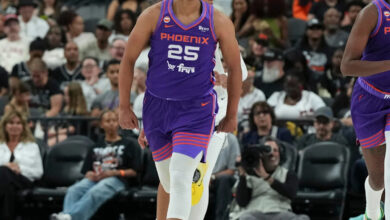
The Las Vegas Aces became the first defending WNBA champion since the 2018 Seattle Storm to lose their season opener — and they didn’t just lose, they got embarrassed.
A 33-point blowout against the Phoenix Mercury looked more like a preseason scrimmage than opening night for the defending champs.
But less than 24 hours later, on the road, the Aces responded exactly how elite teams do: by winning by 27.
Because that’s what great teams do. They correct fast.
A'ja Wilson posted near-identical stat lines in both games, finishing with 19 points in each while adding four rebounds and three to four assists. The production never disappeared, the supporting cast simply showed up in Game 2.
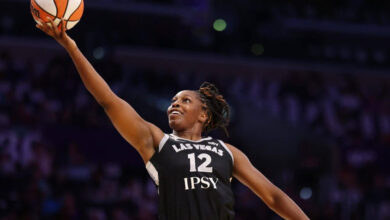
That included Chennedy Carter, who exploded for 22 points off the bench in a performance that immediately thrust her to the top of the odds board for Sixth Woman of the Year.
The bigger takeaway here is simple: don’t overreact to one ugly loss. Las Vegas remains one of the clear favorites in the WNBA Championship odds and opening weekend did little to change that long-term outlook.
ON DECK FOR LAS VEGAS
Back-to-back games against a rebuilding Connecticut Sun team. I’d be shocked if Vegas opened lower than -15 in either matchup — and honestly, I’d still consider it playable up to -16.5.
3. Caitlin Clark vs. Paige Bueckers already feels like the WNBA’s next great rivalry
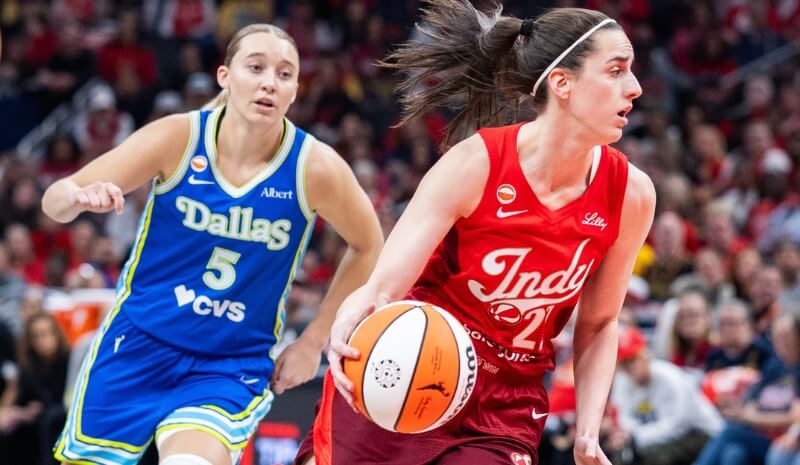
The first meeting between Caitlin Clark and Paige Bueckers somehow lived up to the hype, and then some.
The Dallas Wings outlasted the Indiana Fever in a 107-104 instant classic that felt far bigger than just another early-season WNBA game.
Bueckers was phenomenal, finishing with 20 points, four assists, and three rebounds while shooting an absurd 8-for-10 from the field. Clark matched her with 20 points, seven assists, and five rebounds of her own, though her shooting struggles from deep continued, finishing just 2-for-9 from three-point range.
And that’s becoming a real conversation now.
Clark entered the game shooting just 15.5% from beyond the arc across her previous eight WNBA games dating back to last season, a shocking number for one of the most dangerous perimeter shooters women’s basketball has ever seen.
Meanwhile, the discourse leading into this matchup was already heating up after WNBA general managers voted Bueckers as the player they’d most want to start a franchise with, earning 33% of the vote compared to Clark’s 20%.
That says two things.
First, it shows just how respected Bueckers already is around the league despite being at the very start of her professional career. Second, it highlights where Clark’s game currently sits: still elite, still wildly impactful, but no longer untouchable in every conversation surrounding the future face of the league. That shift is already starting to show up in the WNBA MVP odds, where Paige Bueckers has already shortened from +1400 to +750 after opening weekend.
The reality is that both players are phenomenal talents, elite leaders, and arguably the two most marketable young stars in the sport today. And while the basketball world spent the last year obsessing over Clark vs. Reese, this matchup feels different.
This feels sustainable.
This feels like the rivalry that could define the next era of the WNBA.
4. WNBA expansion teams got a harsh welcome to the league
Reality hit fast for the WNBA’s newest franchises.
Both the Toronto Tempo and Portland Fire dropped their inaugural games, a reminder that excitement and long-term competitiveness are rarely built overnight in expansion basketball.
To their credit, both cities absolutely showed up.
The crowds in Toronto and Portland were massive, the atmospheres felt legitimate, and the league clearly has two markets capable of sustaining real WNBA support moving forward.
But on the floor? There are going to be growing pains. A lot of them.
Toronto’s roster construction is especially concerning early on. The Tempo will likely live and die with Marina Mabrey creating offense, and that’s a dangerous place to be over a 44-game season. The frontcourt lacks physicality, the depth is thin, and once the second unit checks in, the talent drop-off becomes noticeable quickly.
That’s not even really criticism. It’s just expansion reality.
Portland finds itself in a similar spot, although the Fire at least appear to have a few more reliable scoring options offensively. The bigger issue there is defense, which already projects as a season-long problem.
EARLY LOOK AHEAD
The WNBA odds already have the Fire listed around +13.5 against the defending champion Liberty in their next matchup — a sign expectations remain low for Portland early in the season.
Naturally, there will be comparisons to last year’s Golden State Valkyries team that immediately found success. But that situation may have created unrealistic expectations for what expansion teams are supposed to look like early on.
Golden State caught lightning in a bottle. The roster fit together perfectly, the defense overachieved immediately, and several players stepped into bigger roles seamlessly.
Toronto and Portland simply aren’t there yet.
That doesn’t mean the long-term outlook is bad. It just means both franchises are probably still a couple roster-building cycles away from becoming legitimate playoff threats.
5. The Rookie of the Year race is wide open
Olivia Miles wasted no time shaking up the Rookie of the Year odds.
After opening around +320 before the season, Miles is already down to +100 at DraftKings Sportsbook following a massive debut that featured 21 points, eight assists, three rebounds, two steals, and two blocks.
She looked completely comfortable running the Minnesota Lynx offense in a game that featured 181 total points and nonstop pace.
ROTY MARKET WATCH
Miles moved from roughly +320 to +100 after just one game — a massive early-season adjustment for a 44-game award race.
But while Miles deserves the hype, the market may have moved too aggressively too soon.
Flau'jae Johnson opened her career averaging 14 points across her first two games while immediately stepping into a major offensive role.
The biggest difference? Opportunity.
Johnson is locked into major minutes immediately, and on a rebuilding Seattle Storm roster, the volume should consistently be there.
Outside of those two, most rookies struggled to make a major impact over the first weekend of the season. But after one game, Miles at even money already feels a little too rich.
Notable rookie performances
-
Olivia Miles (Lynx): 21 points, 8 assists, 2 steals, and 2 blocks in a solid debut for the Lynx
-
Flau'jae Johnson (Storm): Averaged 14 points across her first two games as a starting guard
-
Azzi Fudd (Wings): 3 points in just 17 minutes of action on 1/2 shooting. Not ideal for a No. 1 overall pick.
-
Lauren Betts (Mystics): Third in the pecking order. Scoreless in her debut vs. Toronto. Scored 7 vs. the Liberty in 18 minutes.
-
Jovana Nogic (Mercury): Averaged 17.5 points across her first two games on an effecient 8/10 shooting from beyond the arc.
This article originally appeared on Covers.com, read the full article here and view our best betting sites or check out our top sportsbook promos.