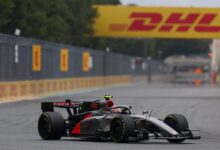
McLaren's Lando Norris thinks Formula 1's Miami energy management tweaks were a "small step in the right direction" but doesn't believe the new regulations can end up in a place where the drivers fully enjoy them.
With input from the drivers, F1 agreed to a number of energy deployment tweaks to allow drivers to push harder in qualifying, reducing the need to lift and coast on a qualifying lap. The full effect of those changes has yet to come to light at circuits that are trickier for energy recovery than the stop-start Miami circuit.
In the meantime, F1 stakeholders have already agreed in principle to go further for 2027 with an increase in power output from the combustion engine by 50kW, through increasing the fuel flow, and an equal reduction in electric energy. That hardware change means the power split between the two will be closer to 60-40 than the original goal of 50-50.
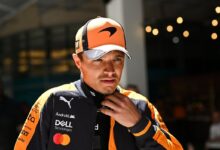
Evaluating the first batch of Miami changes, world champion Lando Norris said F1's deployment tweaks were "a small step in the right direction" but didn't believe the current set of regulations could be fully resolved as long as they are dominated by battery management.
Lando Norris, McLaren
Lando Norris, McLaren
"It’s a small step in the right direction, but it’s not to the level that Formula 1 should still be at yet," Norris said after taking third at the Miami Grand Prix. "If you go flat out everywhere and you try pushing like you were in previous years, you still just get penalised for it.
"You still can’t be flat out everywhere. It’s not about being as early on throttle everywhere. You should never get penalised for that kind of thing, and you still do. So honestly, I don’t really think you can fix that. You just have to get rid of the battery. So hopefully in a few years, that’s the case."
Team-mate Oscar Piastri said Miami was the first time he was in a position to experience 2026's wild closing speeds between cars deploying and running out of energy, which led to a big crash for Haas driver Oliver Bearman in Japan, and said they are still "pretty crazy" right now.
"The races are basically exactly the same, and I think today was my first proper experience of overtaking people and then having to defend and stuff like that. It’s pretty crazy, to be honest," Piastri said.
"At one point George [Russell] was one second behind me and managed to overtake me by the end of that straight. And it’s just a bit random. The closing speeds are huge, and trying to anticipate that as the defending driver is incredibly tough to do.
George Russell, Mercedes, Oscar Piastri, McLaren
George Russell, Mercedes, Oscar Piastri, McLaren
"And obviously for the overtaking driver, I wasn’t that pleased with one of the moves that George did, but I kind of found myself almost doing the same move about five laps later, just because the closing speed is enormous. So, from that side of things, not much has really changed.
"I think the collaboration again from the FIA and F1 has been good, but there’s only so many things you can change with the hardware we have. So, some changes in the future are still needed for sure. How quickly we can do it is the big question."
Race winner and championship leader Kimi Antonelli said the vast speed differences require a large amount of trust between drivers when battling wheel to wheel, because cars are trickier to manoeuvre when they have lowered their front and rear wings in Straight Mode.
"The closing speeds are massive, and you also need to trust the guy who is defending because also with this active aero, the car is pretty lazy when you want to change direction, so you need to think in advance," Antonelli said.
"As I said, you need to trust the driver who is defending. But it was a small step in the right direction, and let’s see what’s going to happen next."
Read Also:
How the 2027 F1 rule changes will work
To read more Motorsport.com articles visit our website.