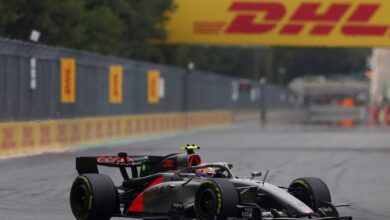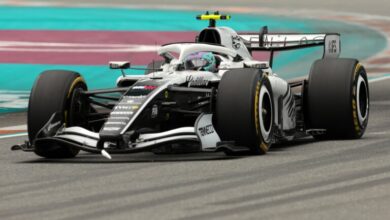
The ultimate engineering meritocracy. For as long as we can remember, Formula 1 has always sold itself on this sole promise: If you build a rocket ship, you dominate the grid. But if you botch the regulations? Well, move to the back of the pack until your engineers find a miracle. At the core of it, the “sink or swim” DNA makes the championship trophy mean something.
But as the 2026 season slowly unfolds, it looks like FIA has pretty much abandoned that ruthless nature in favour of something that feels uncomfortably close to a video game catch-up. As recently reported by Motorsport.com, the FIA has quietly tweaked the 2026 regulations to offer a massive safety net for struggling manufacturers, and honestly? It does raise some questions about the fairness levels.
Let’s break it down: ADUO (Additional Development and Upgrade Opportunities). Originally, this was meant to prevent the kind of decade-long engine dominance we saw from Mercedes back in 2014. But according to the latest regulatory updates, the FIA has introduced an extreme “bailout” tier for any manufacturer whose Internal Combustion Engine (ICE) falls more than 10% behind the field’s performance benchmark.
You don’t just call it “moving the goalposts.” This is a literal redesign. In any other era, being 10% off the pace meant you were an embarrassment to the paddock. In 2026? It means you hit the jackpot. This new tier doesn’t just offer a little extra help; it provides a massive $19 million injection of resources. Doesn’t it all feel less like fair play and more like a slap in the face to teams like Mercedes and Ferrari, who turned up with solid power units?
How FIA’s New ADUO Rules Hand Honda a $19M ‘Catch-Up’ Lifeline
See, the specifics of this bailout are enough to make any team principal’s head spin. Manufacturers falling into this >10% deficit category are granted a staggering 230 extra Power Unit Test Bench (dyno) hours—a massive leap over the 190 hours given to those with a smaller 8% deficit. But that ain’t even the real kicker.
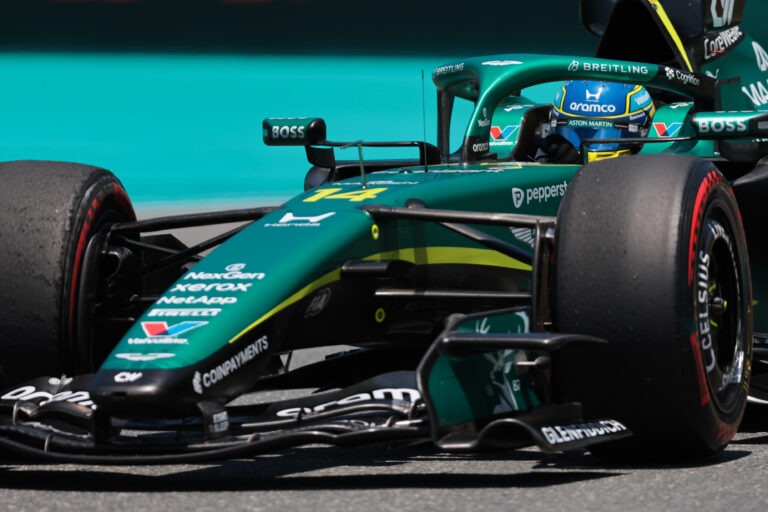
The FIA is also allowing a $11 million downward adjustment to the cost cap, effectively allowing struggling teams to spend more to fix their mistakes. On top of that, they are handing out a one-off $8 million bonus specifically for this inaugural 2026 season. A sweet-sweet $19 million package on the dime for anyone who builds the worst engine. While the FIA won’t directly call out the names, fans have kinda figured out that the fingers point towards the Honda–Aston Martin partnership.
Because of the reshuffled calendar, the FIA has confirmed the first assessment period ends at the Canadian Grand Prix. While at this point, Fernando Alonso is probably having a bad case of deja vu, practically fighting for scraps in almost every race due to the vibration issues and the “clipping” problems. However, by the time the dust settles in Montreal, the worst-performing engine will likely be handed a massive competitive advantage on a silver platter.

Well, almost no fan indeed wants to see a legend like Alonso turdling around at the back, but we do have to ask: at what cost? When you start subsidizing failure with tens of millions of dollars in extra development and dyno time, you aren’t just “balancing” the grid. You are pretty much going against what made F1, F1.