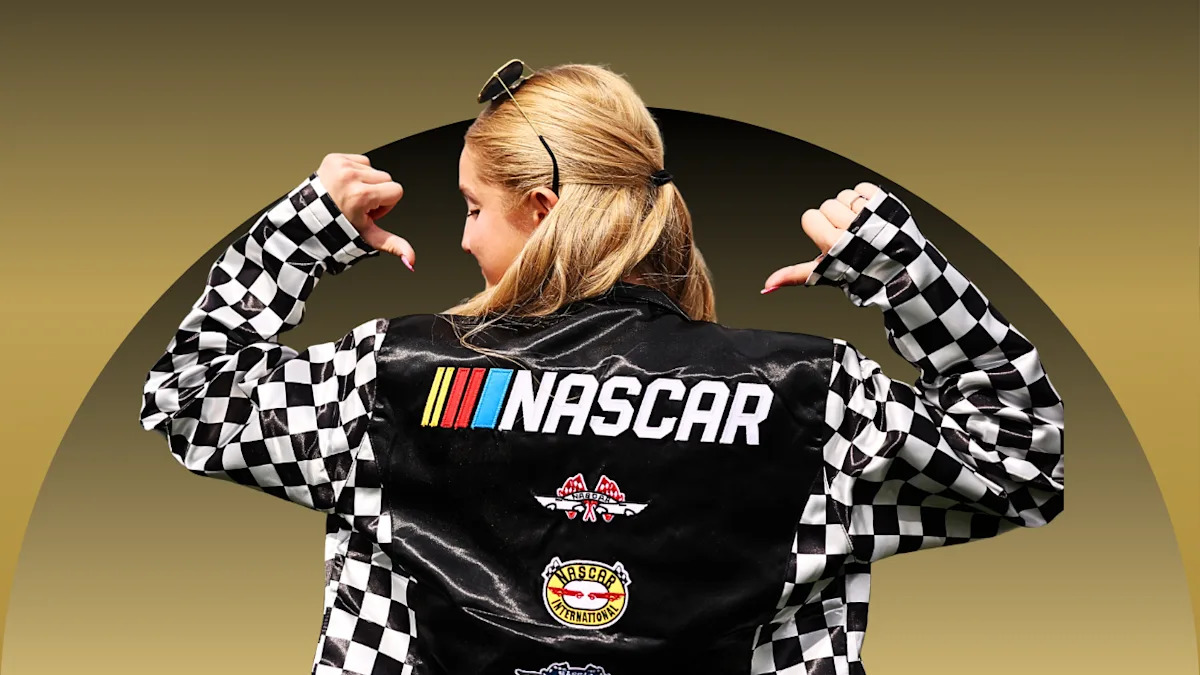
NASCAR this week sued hundreds of anonymous defendants in China that are allegedly selling pirated and counterfeit products.
These individuals and businesses, NASCAR asserts, are engaged in “mass counterfeiting” and a “deliberate and coordinated scheme to trade upon the goodwill associated with the NASCAR marks.”
More from Sportico.com
-
Nike Says ‘Ciao’ to ‘Denaro Puro’ Air Jordan 4 Trademark Claims
-
NFLPA Sues Leaf Trading Cards Over IP, Group Licensing
-
Cubs Score Another Win in Wrigley View Rooftop Fight
NASCAR’s complaint was filed in the Southern District of New York and contains claims for trademark infringement and counterfeiting, unfair competition and trademark dilution. The racing circuit seeks a court order that would block the defendants from using NASCAR trademarks and selling counterfeit goods. Applicable trademarks cover a wide range of NASCAR products, including clothing, caps, keychains, toys, miniature cars and board games.

The racing association also wants a court order that would, upon NASCAR’s request, direct online marketplaces, social media platforms and search engines to “disable” or “cease” providing services that make it possible for the defendants to sell and market pirated and counterfeit goods.
Authored by Keaton Smith of Whitewood Law, the complaint details NASCAR’s efforts to try to find actual names and physical addresses for the defendants.
“Few, if any, of the defendants,” the complaint asserts, “provided a complete and accurate physical address on their respective e-commerce store sites.”
Even when NASCAR found addresses, they appeared to be fictitious or inaccurate because they “were not located in an area where any business potentially linked to the defendants could reasonably be located.”
The complaint also explores the intertwined economics of illegally selling counterfeits.
Counterfeiters’ ability to sell pirated products for a profit—despite lower prices and the need to absorb manufacturing, advertising and shipping costs—“requires an economy of scale only achievable through a cooperative effort throughout the supply chain.”
Citing a Department of Homeland Security study on combating trafficking in pirated goods, NASCAR’s complaint explains that infringers coordinate supply chains and distribution networks to generate “huge profits for the illegal pirating network.”
The complaint also details how ordinary deterrents in intellectual property law, such as takedown notices, often don’t dissuade pirates since they use aliases to “stymie authorities.” These companies also rely on “sophisticated” technology methods to conceal “their true identities” as well as “the full scope and interworking of their illegal network.”
Other professional sports associations, including the major pro leagues, have taken similar measures as NASCAR in attempting to protect their brands and fans from fraudulent imposters. The NBA, for example, has sued counterfeiters and stressed how these companies are “in constant communication with each other” through online chat rooms and other websites.
While court orders that block counterfeiters can help to safeguard intellectual property, sometimes those counterfeiters simply turn to other aliases and cybersquatting ploys to continue their activities. This has sometimes been described as a “whack-a-mole” problem in IP enforcement.
A 2024 report by the Office of the U.S. Trade Representative finds that counterfeit and pirated goods from China “accounted for 84% of the value and 90% of the total quantity of counterfeit and pirated goods seized by U.S. Customs and Border Protection.” The report places some of the blame on social media platforms and e-commerce websites for facilitating counterfeit sales through influencer promotion and links to fake websites.
Best of Sportico.com
-
College Athletes as Employees: Answering 25 Key Questions
Sign up for Sportico’s Newsletter. For the latest news, follow us on Facebook, Twitter, and Instagram.