Seattle Mariners catcher Cal Raleigh was the story of the 2025 MLB season. Raleigh — affectionately nicknamed “Big Dumper” — clubbed a league-leading 60 home runs and drove in an astounding 125 RBI to push the Mariners to the postseason. In doing so, he nearly won the American League MVP award, just losing out to Aaron Judge.
After coming so close to toppling Judge, all eyes were on Raleigh heading into 2026. Could he somehow get even better and finally wrestle away the MVP award?
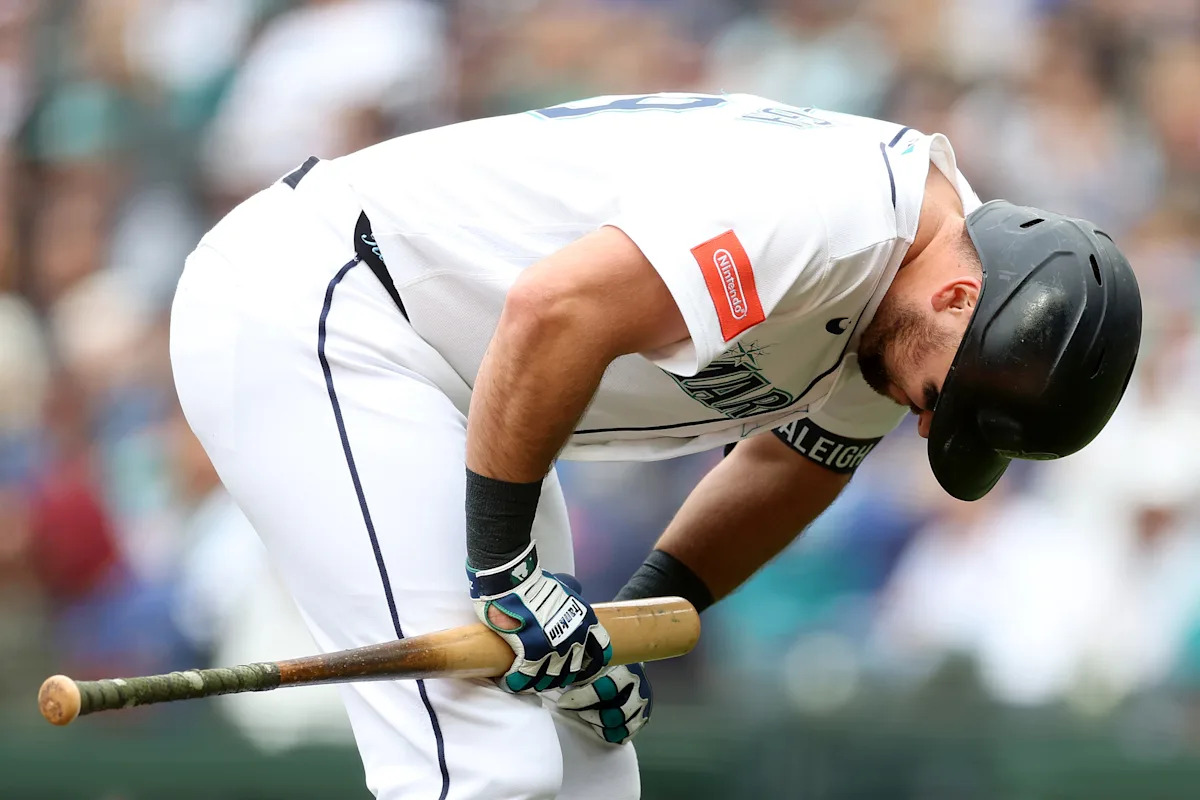
Thirty-nine games into his 2026 campaign, however, and Raleigh has been one of the worst hitters in the majors. His futility reached depressing levels Monday, as Raleigh went 0-for-4 during a 3-1 win over the Houston Astros.
The performance extended Raleigh’s hitless streak to 36 at-bats.
Thanks to that streak, Raleigh’s slash line is down to just .157/.238/.320 in 2026. That’s a far cry from last season, when Raleigh hit .247/.359/.589 over 159 games.
With his MVP hopes now a distant, distant memory, what’s driving Raleigh’s poor start? Will his excellent 2025 go down as one of the biggest flukes in baseball history?
Probably not.


While Raleigh has clearly struggled to open the 2026 MLB season, there’s enough in his profile to suggest a resurgence is coming.
The easiest evidence of that is Raleigh’s .181 BABIP, which is the third-lowest in baseball among qualified hitters. Raleigh is prone to lower than normal BABIPs due to his fly-ball-heavy approach — as fly balls that don’t leave the park are often caught for outs — but his 2026 mark is down considerably from his .248 career BABIP. As his hits start falling in more, Raleigh will see his slash line start to tick up.
From a bat data perspective, Raleigh’s swing speed and swing length from both sides of the plate are consistent with last year. So his 2026 struggles aren’t the result of a different swing or a nagging injury that has sapped his ability to swing the bat hard. He’s generally in the same spot as last season.
While that points to a player who should see his numbers rise, Raleigh has earned a fair bit of his bad start so far. For all his strengths at the plate, Raleigh has always struggled with strikeouts. His strikeout rate has ballooned to 31.4 percent this season, partially the result of Raleigh swinging at more pitches outside the strike zone. Raleigh’s made more contact on those pitches, but it hasn’t been loud contact. It’s tough to fully barrel up a ball that’s out of the strike zone. When Raleigh has swung at a ball in the zone, however, he’s making contact at only a 76.2 percent clip, which is down compared to his past three seasons.
Because of that, his exit velocity has plummeted to a miserable 86.9 mph. Last season, Raleigh’s average exit velocity was 91.3 mph. To further put his 86.9-mph exit velocity into context, San Francisco Giants second baseman Luis Arraez has an 86.5-mph average exit velocity this season. Arraez has hit double-digit home runs just once in his career.
Despite all that, better days are coming for Raleigh. Nothing in his profile looks completely out of whack. There doesn’t appear to be an underlying injury or massive change in approach that’s driving his struggles.
Instead, Raleigh simply looks like a player who is just slightly off to begin the 2026 season. Maybe he’s not seeing the ball well right now or something in his swing is preventing him from squaring up the ball as much as usual.
With a tweak — and some luck — Raleigh should be back to his slugging ways before long. It’s undoubtedly been a frustrating year for Raleigh so far, but he’s far too good a hitter to continue down this path.