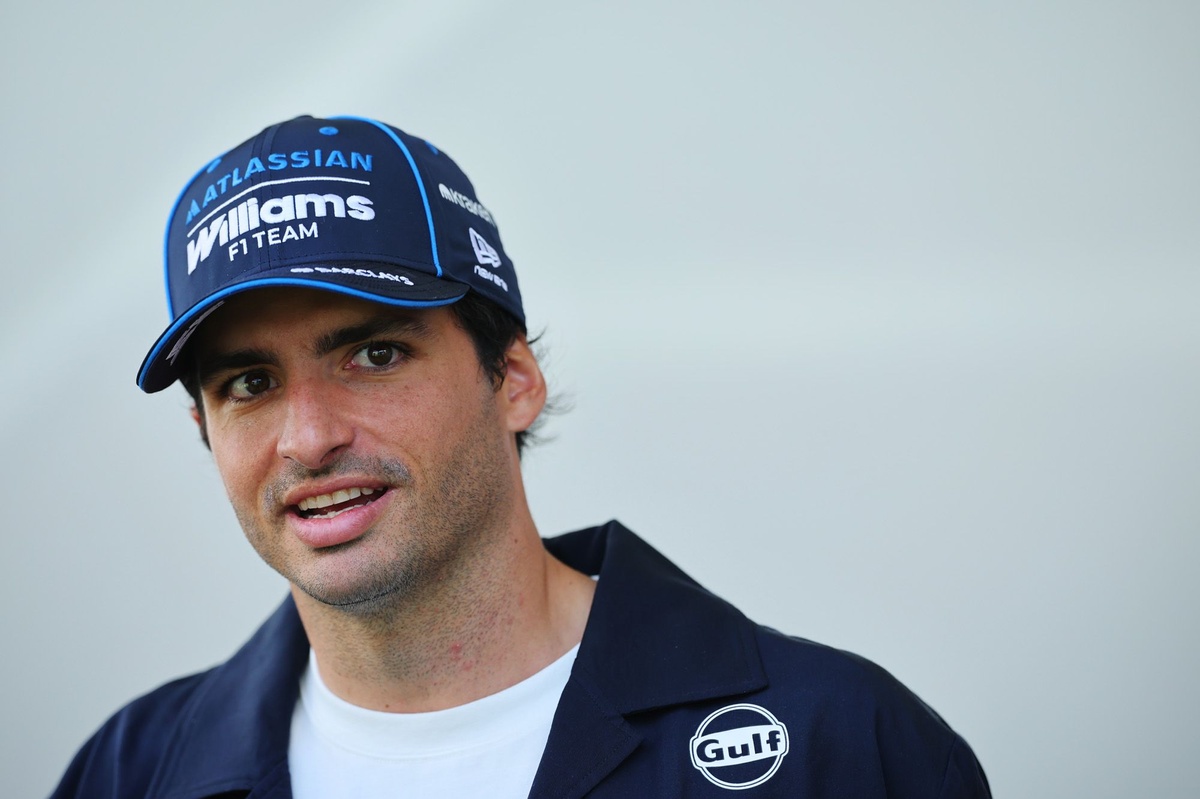
Williams driver Carlos Sainz has been among the more vocal critics of the new Formula 1 regulations, but he now says he’s going to be less negative in public – while still having major reservations.
Ahead of the Miami Grand Prix last weekend, the FIA introduced tweaks to the amount of energy which could be harvested and deployed in qualifying and race scenarios.
Safety and the avoidance of huge speed disparities caused by differences in battery charge levels was the primary aim, but there was also a recognition that drivers were being inhibited from going flat out in qualifying.
Read Also:
A quick fix or work to be done: How F1’s rule changes went down in Miami
Wet-weather procedures were also tweaked, with changes to where and how much power could be deployed, along with a rise in blanket temperatures from 60C to 70C for the intermediate tyres. But a consensus is emerging that, while the changes represent a step in the right direction, they haven’t gone far enough to fully address the drivers’ complaints.
“Not for qualifying,” said Sainz after the race. “I think for quali there's still a long way to go. As I said, I'm not going to criticise it anymore.

“I'm just trying to be productive to keep insisting that this is not good enough for F1. But it seems like at least the racing was a bit better. Happy with the steps they did also to bring the race forward [by three hours, owing to the thunderstorm threat].
“And I think the FIA this weekend, also listening to the weather concerns with the intermediate tyres. You cannot fault them. I think they've done a brilliant job. Now everyone seems to be working in the same direction. I think we just need to convince a few [power unit] manufacturers that this is still not the standard that everyone should have in quali and we need to keep improving.”
Carlos Sainz, Williams
Carlos Sainz, Williams
Among the main complaints from the drivers about qualifying under the new regulations is that they feel inhibited from pushing flat out around corners, because this means they run out of electrical energy faster on the straights. In effect they are being punished for doing their jobs while a software algorithm decides the fastest way around the lap, a template from which they are not permitted to deviate.
Another frequent complaint from drivers was that before starting their qualifying laps, they could not exit the final corner flat out because this would ‘spend’ energy and compromise the qualifying lap itself. This led to the absurd scenario of them having to rehearse an optimal throttle position for each track’s final corner in the simulator, typically around 50%.
Although this was supposed to have been fixed by the latest tweak, several drivers reported deployment issues in qualifying in Miami, owing to the nature of the track layout and the remaining quirks of the energy-management rubric.
Sainz’s team-mate Alex Albon was one such, qualifying 15th after he backed off the throttle to let Sainz by because Sainz was on a push lap. This confused the management software and compromised his lap.
“The pack, the battery likes to be in a certain position, software likes to be in a certain position starting a lap, so when you go down the back straight there's a lot of stuff that you need to do to optimise it, to make sure that it's all happy basically,” Albon explained.
“You can do it, it's possible… but when you have to let cars past down the straight before the last corner and you're not doing exactly the right thing all the time. So yeah, I think I lost four tenths into Turn 1, you're starting on the back foot pretty quickly.
“It's funny because when we look back at it, basically by me letting Carlos past and backing off, I compromised my own lap. You try to be nice, you get out of the way, but then by getting out of the way you overharvest and you basically ruin your own start.”
Read Also:
Where will ‘yo-yo’ F1 racing return?
To read more Motorsport.com articles visit our website.